
 I have 2 serious questions that I would like to pose to church leaders:
1. Is your church as successful as it possibly can be at reaching the lost and making disciples?
2. If not, what are you willing to do (short of sin) to make your church as successful as possible at reaching the lost and making disciples?
I realize that these questions are oversimplified and perhaps some will consider them unfair. There are many variations and nuances that could cause us to reject such questions as senseless. But please, indulge me for a moment.
As a church leader for over 35 years, it is my responsibility to help the church be as successful as possible. We realize that different people define success in different ways. For purposes of clarity, let’s define success for the church this way: accomplishing the job that God has assigned to us. Perhaps there will be some debate over this job description but the common benchmark for the church is usually twofold: the Great Commandment and the Great Commission.
Jesus identified the Great Commandment: “Teacher, which is the greatest commandment in the Law?” Jesus replied: “‘Love the Lord your God with all your heart and with all your soul and with all your mind. This is the first and greatest commandment. And the second is like it: ‘Love your neighbor as yourself.’ All the Law and the Prophets hang on these two commandments.” (Matthew 22:35-40) The Great Commission is recorded in Matthew 28:19-20, “Therefore go and make disciples of all nations, baptizing them in the name of the Father and of the Son and of the Holy Spirit, and teaching them to obey everything I have commanded you. And surely I am with you always, to the very end of the age.” Most students of Scripture would identify these passages as the standard by which the success of a church is measured. We won’t be judged on the number of attendees or how many square feet our church occupies. There is something more important.
We can safely break it down, loving the Lord and others, and making disciples is the goal, the mission of the church. So, one more question: “how are we doing in these areas?”
Let’s take this idea a different direction. Assuming that some of us are aware that we could do better in one or both of these areas, what are we to do with that knowledge?
I have recently returned to my interest in the study of organizational change. My Master’s studies focused much on this topic. Lot’s of great research has been done on the concept of change in cultures and organizations. Let’s look at just one quick aspect of church as it regards the church.
If change does not occur, we will cease to exist.
Think about it! If change does not occur, we will cease to exist.
Of course, there are exceptions. But generally speaking, a church that refuses to adjust will close it’s doors, perhaps sooner rather than later.
I shouldn’t have to state the obvious, but because someone will find it necessary to call me out, let me say this: The Gospel never changes. It must not. No watering down allowed. No mixing and matching Bible verses based upon our whims. We can never entertain the idea of straying away from what the Bible says. That is firmly established. The Message must never change!
But what about our methods?
Listen, it is not our adherence to the Bible that is creating problems for the church in the Western World; it is our adherence to our opinions about the type and style church that we prefer. While there is opposition to the Truth, I can’t think of one church in my area of responsibility that has suffered for it’s position on the Word of God. But I know many, perhaps hundreds that are suffering because they are committed to an ineffective style of ministry. I personally have had the painful responsibility of closing a few churches that ceased to exist. The buildings stood. But pastors left, people left and the buildings were left empty. It wasn’t preaching the Bible that closed the doors. It was refusal to consider another approach to ministry that closed many of the doors. Funerals for ministries are mournful occasions.
Here is some Latin for you: Ab actu ad posse valet illatio – This phrase means, “From what has happened, we may infer what will happen.” It may be understood this way: past performance is indicative of future results. When we observe a pattern, we can assume that, without adjustments, the pattern will continue. Newton’s first Law of Motion (inertia) indicates that an object at rest stays at rest and an object in motion stays in motion unless acted upon by an unbalanced force. Applied to the church, this means that a stagnant church will remain a stagnant church unless and until someone or something impacts change. Our Latin phrase tells us that we can predict what will happen in a church if we take the time to observe what is currently happening, and what has happened in the past. If a church is stuck – no new people are coming, no one is coming to Christ, the attendance is plateaued or declining, unless something very significant takes place (that is different from what has been happening), that church is doomed to fail. This may seem too negative. I’m sure some would call it a lack of faith. But if your car is broken down on the railroad track and a train is barreling down, you can pray all you want – but God is telling you to get out of the car and run!
Back to our initial questions. Are we winning people to Christ at a pace that is pleasing to God? If not, what are we willing to do in order to change that?
What is off limits if it results in people finding the Lord?
- Would you adjust your worship schedule?
- Would you relocate your church?
- Would you spend church funds differently?
- Would you change your choice of clothing, music, décor, etc.?
Of course, none of these things will automatically bring people to Christ. But my point is, if what we are doing is not working (and hasn’t been for some time), what is the harm in trying something different? One more time, we are not considering changing what the Bible says. But the Bible never specifically addresses many of the things that some churches believe are sacred.
Let’s tread lightly here. Some will respond to my query by saying, “we just need to pray more.” Or, “we just need old fashioned move of God like we used to have.” Or, “people aren’t as committed as they used to be; if they come to church more, the problem will be fixed. “ I agree with all of these points – to a point. But many among us pray continually. We enjoy powerful experiences of Pentecost. We go to church every time the doors are opened. And still, nothing changes. Let’s not quit doing these things. But perhaps there is more that God is saying to us.
I am not picking a fight with any tradition. I am not discounting the value of any particular method of ministry. I am asking us to consider what might be an incredible opportunity for the church in America. Without doubt, we are in trouble. Our numbers are reducing, younger generations are losing interest in our churches and we are closing churches. Maybe, just maybe, we should look at our methods, our approach, our mission.
Chris Hodges challenges the church by asking: “Why do we exist?” A simple answer is, we exist to glorify God and to win the lost. We don’t exist to be a comfortable place for Christians to gather – until they all die and the church closes.
Jesus gave us one job – to win the lost. If by changing, adjusting, tweaking just one of our practices, preferences or traditions, we may win one to Christ, then change we must.
If what you are doing is working – if people are regularly finding Christ, if you are making disciples, if your church is reaching the mission field around it and loves are changing – keep it up. But, if you realize the church could do more, what are you willing to change in order to see that happen?
 I do not believe that politics offers hope for our world. I believe the Church is the Hope for our world, as ordained by God. The Church preaches the Good News of Jesus which is God’s plan of salvation.
 Based upon current trends and what some experts are saying, we will see an increase in a change of approach and methodology in the planting of new churches in America. These changes may not be good or bad per se, but we should be aware and consider our approach. These are all in practice in many places, perhaps we are not aware. Below are a few observations about some new approaches:
 We frequently complain about the condition of the world. I often hear pastors and leaders grumble about the condition of the church they serve. Family members freely voice their disappointments with their family. Employees criticize their supervisors. It seems to be the way of the world.
 These days, leading ministry may be compared to the Thanksgiving meal we are all anticipating. We get a plate and start loading it up. When we run out of room, we get a bigger plate. If that plate proves to be inadequate, just grab the turkey platter!
 Pastors can be pretty demanding. They want us to come to church every time the doors are open, pay our tithes and then also give in offerings, volunteer to teach Sunday School and serve at work days, invite our neighbors to church and then pray for the church an hour per day! How unrealistic is that?!
 There are things about ministry that can only be learned through experience. There are things about ministry that will only be learned through formal education. We need both!
 Perhaps some modern Believers have misguided expectations regarding how we will be treated in today’s culture. We seem to get very frustrated and even defensive when others do not respect our opinions. We get offended and become defensive of our beliefs, our rights and our convictions. Some of us are quick to fight to preserve what we believe we deserve. A few even think that we deserve honor because of our faith.
 I’ve recently been considering how important it is for us to invest our knowledge, wisdom and experience in the next generation. I cannot overstate how important this concept is. If you are an adult and you have some semblance of a well-structured life, you OWE it to those coming behind you to impart what you know.
 1. Strategic Reading. No one who leads has a lot of extra time to read everything. And so much of what is available is redundant or shallow. Find your theme, do your research and read. Read less but read deep. Don’t try to retain everything or read too much, but read, and do so strategically.
 There is irony in anyone writing an article on the topic of humility. How does one become arrogant and presumptuous enough to address the need for humility in others? Indulge me for a moment.
 We beg, we plead, we guilt trip and we promote. Still, the vast majority of people in our communities will never set foot in our churches. Some statistics reveal an all-time low in church attendance. We can blame the people – their priorities are wrong and they don’t love God. Or we can consider offering a more “entertaining” worship experience. But does this actually solve the problem?
 Most people in the church are good. The vast majority of the people whom I have served as a pastor or in ministry in general had pure motives and could be trusted. But there are a few, just a minority, that seek to destroy, or at least are happy when destruction comes.
 I purposefully hyphenated the word discouraged.
 We must stay on Mission!
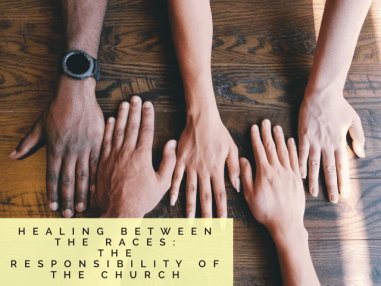 Allow me to begin this article with a disclaimer. I do not claim to be an authority in race relations. While I have studied the issues and have worked in multicultural ministry for years, I realize my limited exposure to the concepts, simply because of my race. In my effort to learn more, I have recently read a variety of authors who more adequately address the topic. Among them are Sean Palmer who wrote Why Christians Are Incapable of Racial Healing
  It’s been said, there are 2 things that you can count on for sure – death and taxes. Well, obviously, there are more things than this that are inevitable. The love of God, the power of the cross, and eternity are for sure. The Bible says, “Heaven and earth may pass away but the Word of the Lord remains.” I would like to humbly add one more thing to this list: CHANGE. Regardless of whether or not we like it, change always comes. There is no denying it, avoiding it, or outsmarting it. Change happens.
 Thoughts on Life and Leading