Flannelgraph Memories

I grew up in a church age when our Sunday School teachers utilized the most recent multimedia tools available. For the youngins among us, flannelgraph was a primitive teaching tool, with a piece of flannel material stretched over a frame, and a paper likeness of Biblical characters was attached on the board to help in telling the story.  I remember sweet Sister Gregory and Sister English passionately telling the Gospel stories using these rudimentary teaching tools. 

But I had some confusion back then. The background picture seldom, if ever, changed. One week the scene was the Garden of Gethsemane and the next Sunday it was Mount Sinai – but they looked exactly alike! One week, the guy in the blue robe was Peter, the next week, he was Paul. The bald guy may be Matthew one week and Isaiah the next (I assumed the bald guy should be Elisha!)  Our teachers explained that these people had died and were now in heaven. So, I deduced that, when one of our elderly saints in the church died, they would show up on the flannelgraph board next week. Sister Lane and Brother George never showed up on the board – which made me wonder if they made it to heaven! Then, one of the mean boys in class (not me!) drew a Hitler mustache on one of the characters, maybe Joseph or maybe John. I was mortified at the sacrilege! Finally, after years of use and some abuse, the flannel began to weaken, and the characters could no longer remain attached on the board – they would fall off at the most inopportune times. And the boys, me included, would laugh. 

It was archaic and old fashioned. But it worked! Those stories came alive, not because of the flannelgraph, but because our faithful teachers were passionate about them, and because they loved the students.     

Thankfully our kids and teachers have more effective learning tools these days. But it’s not the tools that deserve the credit – it is the faithful servant leaders who minister each week to our children. Thank you; you are heroes of the faith!

I’ll never underestimate the importance of these foundational experiences in my faith formation! The visual elements were crude but they got the job done. Those teachers invested in me. I’m forever indebted to them and to the church for providing the best that they had.  

Shepherd or Hireling?

Church leaders are one or the other. The Scriptures are clear, the sheep belong to the Good Shepherd, Jesus. Those who serve churches are simply undershepherds. As such, we will give account to the Lord as to how we served His flock. 

So, what is a hireling? “A labourer employed on hire for a limited time. His wages were paid as soon as his work was over.” (Easton’s Bible Dictionary) 

“In the New Testament the word “hireling” (misthotos) occurs only in John 10:12, where his neglect of the sheep is contrasted unfavorably with the care and courage of the shepherd who owns the sheep, who leads them to pasture and lays down his life for their protection from danger and death.” (International Standard Bible Encyclopedia)

I have witnessed the behaviors and characteristics of both shepherds and hirelings, and have developed this simple summary: 

Pastors love the flock; hirelings love attention.

Pastors serve the flock; hirelings use the flock for their own selfish gain.

Pastors pray for the flock; hirelings prey upon the flock.

Pastors promote the flock; hirelings promote themselves. 

Pastors sacrifice for the flock; hirelings steal from the flock. 

Pastors build up the flock; hirelings build their brand. 

Pastors invest themselves into the flock; hirelings use the flock for the own benefit.

Pastors defend the flock; hirelings demand of the flock. 

Pastors are thankful for their flock; hirelings take advantage of the flock.

Pastors protect the flock; hirelings manipulate the flock. 

John 10:11-12 “I am the good shepherd. The good shepherd gives His life for the sheep. 12 But a hireling, he who is not the shepherd, one who does not own the sheep, sees the wolf coming and leaves the sheep and flees; and the wolf catches the sheep and scatters them.

Scrapyard Leadership

Yesterday, while out for some exercise, I came across a metal scrapyard where crane operators were using huge electronic magnets to move large metal debris from a railroad car to a huge stack.  The process was simple; place the gigantic magnet over the opened railroad car, lower it, turn on the magnet, and it picked up thousands of pounds of metal. The operator would then swing the boom over to the stack and release the magnet. The metal would fall with a crash, and the process was repeated. I assume this went on all day. The salvage yard was massive.

Yesterday, while out for some exercise, I came across a metal scrapyard where crane operators were using huge electronic magnets to move large metal debris from a railroad car to a huge stack.  The process was simple; place the gigantic magnet over the opened railroad car, lower it, turn on the magnet, and it picked up thousands of pounds of metal. The operator would then swing the boom over to the stack and release the magnet. The metal would fall with a crash, and the process was repeated. I assume this went on all day. The salvage yard was massive.

As I often do, I thanked the Lord that I did not have to make a living in such a monotonous and laborious way. But then, I believe the Holy Spirit spoke to me.  In more ways than I care to admit, my leadership can be similar to the crane operator’s job. Problems and issues and concerns and complaints find their way to my railroad car. On a daily basis, due to my responsibilities, I learn of challenges being faced by those great folks that I serve. And so, I spend much of every day, lifting up an issue, dealing with, and hopefully dumping it.  The problem may not be permanently solved but at least it is removed from my railroad car. 

Surely there is more.

Lest leaders become disenchanted with leading, we must learn and practice a better process, especially for those who serve in administration.  

Books have been written about how a leader can learn to lead and not just manage problems. True, someone must manage the problems, but if a leader spends all their time managing (moving scrap), that is all that will be accomplished; there will be no forward progress, there will be no dream, no vision. – Only scrapyard leadership.  

I want to be clear, people are not scrap. I do not want to give the impression that leaders view the people who have problems as disposable; they are not! But leaders cannot solve every problem. What an effective leader must do is decide what they can and should solve. “What is it that only I can do?” If you do everything, you won’t have time to do what only you can do.  Once that boundary is established, a good leader will make sure that managers are in place to deal with the issues that the leader cannot solve. Truthfully, someone who is called to be a manager is better at problem solving than a pure leader.   

I respect crane operators, and I hope they make a good living. But I don’t want to be one. I dream of more than scrapyard leadership. And I dream it for all my friends in leadership.  

Hopes, Wishes and Prayers for 2025

As we prepare for the start of another new year, I’d like to state a few of my wishes for family and friends. Of course, wishes and hopes and dreams have little power to actually bring about good things but prayer based on faith and optimism is a powerful force. 

I hope you’re at peace with God, with others and with yourself. Inner turmoil and emotional agitation creates a chaotic life. That’s not God’s plan for us.

I wish you healthy and happy relationships. Being loved and loving others is foundational for our wellbeing. May you have much joy that comes from great friendships and personal relationships. 

I pray for growth in your life. May your intellect increase, may your talents expand and may your influence and impact multiply. If we don’t grow next year, we’ll shrink. 

I hope for resolve and endurance. No doubt, life hits hard sometimes. Rather than praying for fewer problems, I’d prefer to see us determined to overcome whatever comes against us. 

I hope you dream big dreams. Don’t allow disappointment and frustration to squash your ability to visualize better things. With hard work and God’s favor, your dreams may become reality. 

I pray that you will experience true fulfillment. This happens only when we know for certain our God-given purpose in life and we live it out. There is no greater feeling! 

I wish you joy; genuine, deep, and lasting joy. This kind of joy doesn’t come from anything or anyone other than the Lord. It’s not based on our circumstances or outside influences. I hope you have the joy that Jesus gives!

I’m asking God to give you wisdom. You need prudence and judgement in today’s crazy world. The Holy Spirit will provide this wisdom if we ask.

My prayer is that you will have increased passion for God. May He be your top priority, your reason for living, the greatest desire of your heart. 

Finally, I ask God to give you His perspective of your life. May you see yourself as God sees you. May His opinion of you be the most important influence in your life. 

These are my hopes, wishes and prayers for my friends and family for 2025! 

What Dysfunction May Reveal

Sometimes, not always, a dysfunction or misbehavior can be an indication of previous trauma. For example, sexual promiscuity may be a result of sexual abuse. Harsh response to criticism could indicate insecurity from a lack of affirmation. An out of control temper may reveal a sense of feeling vulnerable or at risk of harm. Harsh judgmentalism can be a coverup for hidden sin. Cynicism and sarcasm may reveal unresolved hurt.

We don’t know what is going on inside other people. But rarely does one’s maladjusted behavior stand alone – something triggers it; there is usually a root cause.

Understand that what we may view as dysfunction may be another person’s normal function. This behavior may be all they know. Their excessive actions may be their safe place, this may be how they have learned to survive. This is not an excuse for irresponsible behavior but at least we should be aware that one’s history has significant influence on one’s current behavior.

Now, let’s turn this inward. What reactions or responses that you exhibit may indicate past trauma that has not been addressed?

Do you hold grudges? Do you like to fight? Are you narcissistic? Do you lack basic compassion? Are you dishonest? Do you bully others? Perhaps there is a root cause that must be addressed. “That’s just the way that I am” won’t cut it anymore.

It’s ok to do some introspection. It’s helpful to peel back layers of the sources of our past pain. It may seem scary but uncovering past trauma is the first step toward recovery.

Most of all, we must allow the grace of God to heal, to cover, to make right the wrongs that may be controlling us. We don’t have to let our past dictate our future any longer.

God wants us whole. He wants our relationships to be healthy. He wants us at peace with Him and others.

You can’t change the past, but God can change your future. Let’s get started.

Leadership 101

Leaders must make the best decisions possible for the people and the organizations they serve. Sometimes, some people won’t like the decision, sometimes many people won’t like it, but leaders are tasked with assessing situations and making the calls that are necessary. This is not always easy. In fact, there are times that the last thing a leader wants to do is to make a tough decision in a contentious issue. But courageous leaders lead on, regardless.

Before reacting to a leader’s decision and before expressing disapproval, consider that the leader knows details that are not common knowledge, and an integrous leader cannot and will not share those details. Perhaps if we knew the details the leader knows, we would have a different opinion.

Remember, leaders will give an account to God for using discretion, discernment, and integrity regarding the organization and the people they are called to serve. And rest assured that in any respectable organization, the leader is also accountable to other leaders. Corrupt leaders will be judged, and honorable leaders will be rewarded – by the One who sees all and knows all.

So, pray for your leader.

Understand that they know details that you don’t.

Support your leader as much as you are able.

And know that, how you treat your leader is how you can expect to be treated by those you lead.

5 Reasons to Go to Church

Folks can think of a million reasons NOT to go to church. I have 5 simple reasons why we should go.

1. There’s no place like church home. Watching services online or on television is a nice substitute, but they cannot replace the experience of being in the same room with fellow worshippers, encountering the presence of God together and responding corporately. God does things when the Church gathers that can happen in no other setting.

2. Your church needs you. According to Scripture, each of us are a part of the Body of Christ and each part is necessary. If we are not present to do our part, either our part will not get done or someone else will have to do it. You and I have specific spiritual gifts, talents, abilities and callings that are unique. No one else can fill your role in the church like you. Your church needs you there.

3. Future generations need an example to follow. If our generation abandons the church gathering, there may be no church gathering available for those who come behind us. Know that when you faithfully attend church services, you are setting an example for others to follow, and they most certainly will need church.

4. It’s a Biblical mandate. Regardless of what some may say, God expects us to gather with our church family. While missing church may not be a sin or a requirement to go to heaven, it most certainly is an expectation displayed in the Bible. Of course, we are wise if we follow the Biblical patterns.

5. You need your church. You need to hear your pastor preach. You need to sing along with other church members. You need to tithe and give in the offering. You need the fellowship of other Believers. You need to serve and exercise your gifts.

You may be able to survive without these things but, without questions, you will not thrive spiritually without these things.

Let’s go to church!

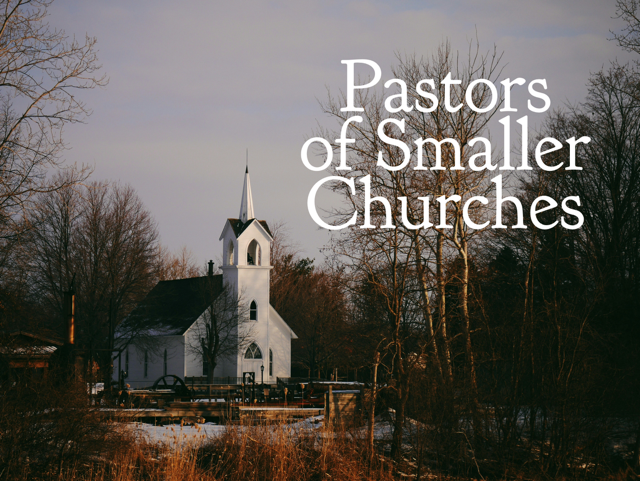
Pastors of Smaller Churches

Small is relative. My idea of a small ice cream cone is 3 dips. No one knows for sure what constitutes a small church. Compared to churches in Indonesia and Latin America, the mega churches of the United States are small. But most of us are aware of when our churches are truly small. Remember, small isn’t bad and large isn’t necessarily good.

I have dear friends who serve diligently in congregations under 25, under 50. I often hear or read discussion about how the small churches are forgotten and their pastors are overlooked. Unfortunately, people, even Christian leaders tend to look at numbers when gauging value. This is wrong and the Lord is not pleased.  But let’s consider a few thoughts:

Not everyone looks down on small church pastors. Of course, it only takes a few times of being disrespected for us to become defensive. It doesn’t feel good to be looked down upon. Let’s try to remember that most good people respect us, not because of the size of our congregations, but because of God’s calling on our lives. Don’t let the few disrespectful people impact your attitude or self-worth.

Don’t be guilty of overreacting or becoming overly defensive. Webster defines the Napoleon Complex as: “a domineering or aggressive attitude perceived as a form of overcompensation for being physically small or short.” Let’s not give the impression that we feel less of ourselves because our ministry is not large. If God has called you to a church, hold your head up! He sees value and worth in that church, and they deserve your best. And how God must trust you to place such a lovely flock under your skilled care!

Don’t be guilty of disrespecting pastors of larger churches; they are not your enemy. It is just as wrong to be critical of a church because it is large as it is visa versa. 

God judges by faithfulness, not size. While He expects us to steward (and multiply) what He’s given us, God will not judge our success on numbers. He judges success on faithfulness; praise the Lord! 

Popularity in the eyes of people is not what matters. Small church pastors may not receive notoriety. They may be overlooked for opportunities, simply because of the visual created by a smaller church. What matters is – God sees. If we are overlooked, let it be by people, rather than God! Besides, promotion comes from the Lord, to seek advancements apart from the Lord’s favor is a painful mistake. 

I do believe that all churches should grow. Our passion for souls and the Mission of reaching the world for Christ requires that we add people to the church.  But we must never value a ministry because of its size alone.

Finally, don’t become bitter. Don’t give jealousy room in your spirit. Don’t allow your view of life to be clouded because of the opinions of others. Sarcasm and cynicism are tools of the enemy. Stay sweet in your spirit, regardless of the size of your ministry. 

Know who you are in Christ, know what He has called you to do, and, regardless of numbers, do this with all your might. That, my friends, is true success! 

You Owe What You’ve Been Given

Most would agree, if we have any true success in ministry, it’s all the Lord’s, He receives the glory. But if He gives you success, does He expect more from you?

Yes, He does!

If the Lord helped you to build your church from 0 to 50 people, you have an obligation to teach others how to do so. If He enabled you to grow a church from 50 to 100, or 100-500, there are pastors just waiting for the information you possess. If God allowed you to be a successful evangelist, missionary, church planter or administrator, you owe it to the kingdom of God to teach others the ability that God has given you.

Some may say that they are too humble to tell others how they did it. They don’t want to be guilty of arrogance and hubris. It’s not arrogant to share the good news, it’s selfish to not share the good news.

Others may say they don’t know anyone who will listen to them. I say, find someone who is currently where you were before God allowed your progress – and offer to buy them coffee. Relationship will open the door for influence.

Still others are waiting for permission to share. They lack the pedigree or title or platform.

You don’t need permission to help others; your possession of knowledge requires you to help others!

This is the way God established it to work. He blesses us so we can bless others, He expects us to share. “When someone has been given much, much will be required in return; and when someone has been entrusted with much, even more will be required.” (Luke 12:48 NLT) We need those who have been blessed by God to show others how to be blessed.

This is Biblical church growth, this is Kingdom growth. Think about it.

10 Observations about Pastors

  • Pastors want to be respected. Regardless of the size of the church or the budget, each man and woman desires to be treated with dignity. And they deserve it.
  • Pastors want to know that they are making a difference. In the Movement, in the community and in the local church, they want to be assured that their work matters and is efficacious.
  • Pastors want to be part of something bigger than themselves. They are not small thinking or selfish; they enjoy investing outside of themselves and their local churches.
  • Pastors really do care about their flocks and they want to be the best shepherds they can possibly be. They are compassionate, servant leaders. 
  • Pastors are eager to secure new resources and gain new insights. Self-improvement and life-long learning is widely accepted and practiced.
  • The vast majority of pastors want their churches to grow; they want to see more people won to the Lord and they want to make more disciples. 
  • Most pastors are very concerned about the future of the ministry and they want to prepare the next generation of Pastors and leaders. Some are concerned because this is not happening on a large enough scale.
  • Most pastors have similar needs and desires: more committed people, additional resources (funds, time, volunteers), and more ministry progress.
  • The vast majority of Pastors work hard to give their very best to the Lord and His Church, and take joy in doing so. 
  • Most (but not enough) Pastors prioritize their families as their first ministry. 

I am basing my observations on this: 

Over the last nearly 12 years, I have preached around 450 messages in around 400 churches. I’ve ministered primarily in 3 states but have also preached in around 12 others. I have preached mostly in Church of God churches but also in a few outside of our movement. I have met many Pastors, spent time in fellowship with them and their families, have visited in many homes and have developed close friendships with many. I humbly believe that I am in touch with the local Church and can speak to the state of many Pastors. I am grateful to serve as a Pastor to Pastors. 

These local church Pastors are the unsung heroes of the Church.

Though the challenges of ministry are significant, and although there is immense pressure on today’s church leaders, they don’t want or need sympathy; they desire prayer support.

God sees and will reward faithfulness on the part of Pastors.

We love you, Pastor! 

The Greatest Resource for Ministry is Not Money

When I ask Church Planters how I can help them, they almost always request money. Those who are revitalizing exisiting churches usually make the same request. Even Pastors who are leading thriving churches are quick to list finances as their greatest ministry need.

“If I just had (x dollars), we could (fill in the blank)…” 

But I contend that money is not the greatest resource for ministry. While this is not my focus, it must be stated that our greatest ministry needs are spiritual in nature. But for this article, let’s talk about a tangible issue.

The Greatest Resource for Ministry is Relationships

We need people more than we need money.

We need friends more than we need buildings.

We need confidents more than we need staff.

We need others who care more than we need equipment.

We need advisors more than we need volunteers.

We need people we love and who love us more than we need the latest program or method.

Solid, steady, growing and trustworthy relationships will lead us to all of the other necessities for ministry. But those relationships must be:

  • Pure – free from ulterior motives. If you’re making friends with rich people in an effort to get their money, shame on you.
  • Intentional – we must be purposeful in building relationships with people who we normally wouldn’t know.
  • Diverse – make friends with a wide variety of people, inside and outside of the church.
  • Mutually benefical – it’s not a healthy relationship if it is one sided.

Ministry is relationships. If you’re starting a church, seek people, not money. If you’re rebuilding a stagnate church, it’s about people. Pastors of strong churches, keep the folks as your main focus. 

Let’s get relationships right, then ministry will be right; needed resources will accompany relationships. If relationships aren’t right, nothing is right. 

What Motivates One to Lead?

The desire and ambition to be a leader is a very good thing. Leaders make good things happen for others. But the whybehind the desire to lead is crucial to understand.  If we have a leader who is motivated by the wrong thing, the Church is in for trouble. 

The need to be needed, the desire to be the focus of attention (selfishness), and wanting to be “in charge” will drive some folks into leadership, and will drive those around them to flee. Ulterior motives such as bringing down an enemy, making lots of money, manipulating others to serve and gaining notoriety are poison that will quickly kill an organization. 

On the other hand, sacrificing for the good of the movement, serving others, uniting and building up the Church, and moving the Church toward the Lord’s will are all pure and godly motives for leading.  

I Thessalonians 5:13 teaches us: “And we beseech you, brethren, that you come to know those who labor among you, and are over you in the Lord and admonish you.” “Know those” really means to acknowledge our leaders, but there is much to be said for knowing, understanding motives and discerning the intents and desires of an aspiring leader in the Church.

Let’s check our motives and remain pure in our desires. Let’s not be influenced or fooled by someone who is, with impure motives, chomping at the bit to take the reins. Let’s seek the Lord for discernment, let’s fast and pray for motives to be revealed, and let’s anticipate the Spirit’s direction in who will lead.     

New Life for an Old Church

Churches, like people, age. Growing older isn’t a bad thing, (it beats the alternative!), but churches that age without adding new attenders won’t continue to grow old, they will die. All over America, churches are closing their doors because no one is attending anymore; the old attenders passed away and no one replaced them.

We don’t want our churches to die! So, what can we do?

Let’s bring New Life to Old Churches!   

A “new” Pastor. I am not a proponent of automatically bringing in a new pastor when the church stops growing, although sometimes that is needed. But it’s better for the current Pastor to become, “new.” New vision, new passion, a new burden for the community…all these are characteristics of a Pastor that can lead new life for the church. 

In other words, new life for the church begins with new life for the Pastor. 

Pastor, if you desire a fresh wind to blow over the church you serve, start reviving yourself. You may be tired, you could be burned out, but as long as you’re the leader, God has spiritual refreshing for you. 

New Leaders: Once again, it may not be a bad idea to recruit a new crop of local church leaders. But much preferred is when the old leaders get revived! If the leaders follow the example of their Pastor, they will enjoy times of spiritual refreshing and a return to their passion for the Lord. This passion must be more than a desire to do things the way they used to be done. This fervency must be for the presence of the Lord, compassion for the lost and a desire to reach the community. This passion must overpower our tendency to prefer the old ways. 

“New” leaders will bring new life to an old church.    

A new Vision. Slogans aren’t enough. A fresh coat of paint and planting new shrubs may be helpful, but this is not new vision. God has a fresh vision, a new dream for each season of the church. This is not to say that what God did in the church in the past was bad, but He hasn’t run out of fresh ideas. What innovative ideas, what creative new approaches may the Spirit be inspiring? What is God saying to the church about new ways to reach the people of the community? Here is a hint: find a need and meet it! 

A new Pastor and new leaders will dream new dreams about a new church. 

New Changes! This is the part that is hard for those who love the old church. The new church won’t look like the old church. The people who are drawn to a new church won’t necessarily look like those who’ve been around for years. There will be new families with new babies and new needs will arise. Old nurseries will be brought back to life. Old Youth Rooms will need to be renovated. Empty activity calendars will fill up. And old worship services will be revived with new people, new worship styles and new results. New members, new training, new volunteers, new ministries, new energy and new excitement! 

An old church will become new when the old church attenders embrace the joy and beauty of newness in their church. They won’t refuse to adapt, they will lead the charge! 

A new Pastor and new leaders and new vision and new changes will result in a new church! And the results will be new names written in God’s book! (Revelation 21:27)   

Let’s bring New Life to our old churches! 

10 Suggestions for Confronting Sin in Others

The following is based somewhat on Scripture, somewhat on personal experience and somewhat on common sense.  

When you think a fellow Christian is in sin and you want to address it:

  1. Check your heart and motivations. Is your desire to rescue someone who is straying, or is there an ulterior motive? 
  2. Purify yourself. Unless you are without sin, your confrontation will be hypocritical.
  3. Do it now. If you indeed believe someone is in sin, delay could be dangerous.
  4. Keep confrontation small, do it in person. Don’t involve uninvolved people. Engage as few people as necessary; this allows greater opportunity for restoration. 
  5. Be gentle. God is the ultimate Judge; harshness is a weapon only He may wield. 
  6. Stay humble. Remember that you are also flesh and prone to failure. 
  7. Assume misunderstanding. Give the benefit of the doubt that imperfect communication has misrepresented the issue. 
  8. Seek to heal. Judgement is not the goal, repentance, forgiveness, reconciliation and restoration is the goal. 
  9. Offer mercy. Treat others better than they deserve. 
  10. Offer grace. Don’t treat others as they deserve.

These are simple ideas on how to do something we must be good at, whether we are on the receiving end or giving end. If we are not effective at this, the entire Church will suffer.

Supporting Scriptures:

Galatians 6:1-2 “Brothers, if anyone is caught in any transgression, you who are spiritual should restore him in a spirit of gentleness. Keep watch on yourself, lest you too be tempted. Bear one another’s burdens, and so fulfill the law of Christ.”

Matthew 18:15 “If your brother sins against you, go and tell him his fault, between you and him alone. If he listens to you, you have gained your brother.”

Luke 17:3 “Pay attention to yourselves! If your brother sins, rebuke him, and if he repents, forgive him.”

James 5:19-20 “My brothers, if anyone among you wanders from the truth and someone brings him back, let him know that whoever brings back a sinner from his wandering will save his soul from death and will cover a multitude of sins.”

Do You Pastor a Struggling Church?

Do you Pastor a struggling church? 

Have you ever said this? 

Our church is struggling because:

Old traditions are holding us back.

The church has a bad reputation in town.

There is a church boss, and it’s not me.

We don’t have enough help (leaders/volunteers).

Our location is bad.

Our finances are limited.

There is a power struggle in the church.

The Board/Council controls everything.

Our building is in bad shape.

We have no music, no youth ministry, no children’s program… 

We can’t compete with the big churches in town. 

In my years of administrative leadership, these are 11 of the most common reasons I hear from Pastors as to why their ministry is not flourishing.

Let’s have some dialogue. While none of us have all the answers, some of us have some of the answers. And we all have encouragement to give to one another. 

I’d love to hear from you!

The Coliseum of Social Media

But the lions are in the stands.

I’m afraid we’ve entered the age of a virtual coliseum where barbaric, human-spirit shredding is the preferred entertainment. The paragraph below provides a brief description of how depraved and cruel people were in Vespasian’s day. I believe they had nothing on our culture!  

“The Roman Colosseum Arena was a stage of combat for the gladiators and occasionally staged mock naval battles. Its 80,000 seat stadium inspired the gladiators, who were mostly slaves, criminals, or prisoners of war, to fight for their freedom. The horrors of the blood-thirsty crowd of thousands cheering on the gladiators’ fight for their lives leaves it to our imagination what entertainment meant to the ancient Romans.” (https://www.headout.com/blog/rome-colosseum-arena/)

One of the hottest tickets at the Roman coliseum was when Christians were mercilessly fed to hungry lions. They were savagely martyred as “fans” watched, ate their popcorn and jeered the bloody Christians.  

Today, bloodthirsty and merciless spectators are provided front row seats in the arena of social media to chant, humiliate, dehumanize and destroy those with whom they disagree. They have an opinion about everything. They pretend they can outperform everyone, regardless of their lack of actual usefulness. But they are so much more than spectators, they are virtual lions, digitally tearing people to shreds. 

This is how today’s coliseum differs from ancient Rome: the lions are not on the arena floor doing battle, the lions are spewing their hateful wickedness from the cheap seats. They are not engaged in the battle, they are too cowardly to risk their lives. So, they cruelly butcher those brave enough to actually fight. They sit on their mother’s couch, hiding behind their keyboard, and talk trash, fearless of repercussions.  

I personally know individuals who are in the very public arena, trying to perform their craft in a professional manner, who have drawn the ire of the crowds. These crowds won’t simply share their disdain for the lack of performance with family or friends, they take to the only place where they can say anything they want to say without consequence: social media. The cruelty is unimaginable in a civilized world. I personally believe we left that world behind a few years ago.  

If you are a productive member of society and become the target of these vulgar barbarians, take heart, you are not alone. Let’s not expect the lions to let up. They won’t have any mercy. They will take great delight in trying to destroy you. But they can’t make you quit unless you allow them.  

Stay in the fight, ignore the social media lions.

By the way, I am not currently a victim of these social media trolls, but I have dear friends and colleagues who are. To them I say, stay focused. Do your job. Let the lions roar. Perhaps they’ll soon become so intoxicated on flesh and blood that they pass out. 

History will prove that you were a warrior and they were nothing more than a roaring but cowardly lion. 

You Don’t Have Many (Spiritual) Fathers

This title comes from I Corinthians 4:15: “You may have ten thousand mentors in Christ, but you don’t have many fathers.” The Apostle Paul is exhorting the Believers in Corinth as the one who led them to the Lord. He had discipled them. He had invested in them. Yet they were not following his leadership.

This is a common problem.

I’d like to utilize this passage to address the issue of spiritual fatherhood/motherhood, and speak about why so few spiritual parents are engaged in discipling younger believers.

Paul is frustrated. He is not seeing his kids exemplify the desired behavior. His “students” are failing. He hopes to restore the brokenness in the teaching/mentoring relationship.

Here are a few reasons why so few seasoned believers serve as spiritual mothers and fathers:

  • Few seasoned leaders have the patience to deal with less mature folks. It seems the older we get, the more we forget what it is like to be young. 
  • Not enough leaders are willing to invest the time, energy and resources needed to serve as a spiritual parent.  It’s much like couples who don’t want children so they won’t be tied down.
  • Some older leaders are intimidated by younger leaders. They feel insecure and are afraid they will lose something by raising up others. We must do better.
  • A few older leaders had no role model when they were developing. They never had the advantage of a spiritual parent, so they don’t know how to become one.  
  • Too many experienced leaders get caught up in methodologies and refuse to adjust or compromise their preferences. Their insistence on rigid adherence to traditions limits their effectiveness in leading less experienced leaders.
  • Some spiritual fathers forget that their spiritual children are children. They expect the relationship to be mutually beneficial. They think their son or daughter should affirm them. They may even “serve” with ulterior motives: to make themselves feel needed and appreciated. 
  • Some potential spiritual parents have discovered that there are few who are willing to be parented. Some spiritual children believe they already know it all. They refuse to sit, listen, learn. Or they only want a spiritual parent that will tell them what they want to hear; no correction, no rebuke, no discipline. And some are only looking for “cool” spiritual parents: the ones who look right, dress right, talk right and are popular.   
  • Some spiritual parents are put off by spiritual children who can’t wait for their parents to get out of the way so they can become the leaders. 

Here is what I’m learning about being a spiritual father: It’s very much like being a biological father. Especially when the “kids” are young, I do the work. I pay the bills. I initiate the communication. I overlook the immaturity. I provide the safety and instruction and covering. And I must be prepared for the slow maturing process to take shape. I may be ignored, forgotten, disrespected and even abandoned. But I am called to father these folks.  

As the children mature, my role transforms; I am less of a trainer and more of a cheerleader.  I’m proud as they excel right past me. I stand back and watch them flourish. I am still a father, but my responsibility changes to a supporter rather than a provider. And spiritual parents seldom are recognized for their children’s success. We must be more than OK with that. 

I am called by God to be a spiritual father. Sometimes that is a joy, at other times, a challenge. But if I refuse to serve as a spiritual father, I bear the responsibility of some precious individuals who will struggle. 

Thankfully, my spiritual sons and daughters are gradually maturing and becoming what God intended. 

A Beautiful Thing About the Church

The Church is the Bride of Christ, the Body of Christ, the Flock of God. We, collectively, are a thing of beauty in the eyes of the Lord. But we are also to be beautiful to the participants of the church – to one another. 

Think about it:

We are different. No two church members or churches are the same. God likes variety; that’s beautiful.

We are multifaceted. We possess various abilities, gifts and talents. God makes sure that every gift the church needs is present; that’s beautiful.

We are diverse. The Church is comprised of all types of people. In fact, heaven is described as being made up of every tongue, tribe and nation; that’s beautiful.

And,

We differ. None of us agree on everything (or sometimes anything), yet we are united! That’s beautiful.

We respect and honor others above ourselves. So, when another member of the Body displays characteristics different from ours, we differ to them. That’s beautiful.

We embrace distinctions. Sisters and Brothers from different cultures are loved. Those who prefer various worship styles and methods are valued. We don’t have to have everything our way in order to love and fully engage in the Church. That’s beautiful.

A beautiful thing about the Church is, God has included us, all Bible believing followers of Christ, regardless of our earthly quirks and idiosyncrasies. This includes you and me.   

How beautiful is that!? 

Emotional Health and Ministry Success

A Case Study in Emotional Health in Ministry

A Pastor is leading a vibrant and growing congregation. Things are on track for good growth. As the excitement builds, tension arises in the congregation and conflict of some type is inevitable. The pastor feels unable to manage the tension and conflict. Discouragement sets in. He/she responds to the pressure over-defensively or with an emotional outburst or by withdrawing from relationships, or by resigning… These responses on the part of the pastor reveals a personal emotional issue. We hesitate to identify this issue as a weakness or dysfunction or compromise, but many times, it is. 

I am more convinced than ever that the success of a minister is immeasurably impacted by their emotional health. We’ve seen very gifted and hardworking women and men who should be experiencing significant ministry productivity but suffer from an inability to deal with the stress and pressure that such a ministry includes. We all know that pressure and stress cannot be eliminated from ministry; we must simply learn how to deal with it. 

How emotional health dictates ministry success:

The more individuals involved in a ministry, the more likely the stress. Contrary to the opinions of a few, the larger the church the more difficult it is to lead. People, even church people are messy. A leader must be adept at dealing with imperfect people, the larger the ministry, the bigger the messes become! Some Pastors enter the ministry expecting to deal with kind, sweet and well-functioning folks. Then they conduct their first church service – LOL!

Too many church leaders are not emotionally strong enough to handle disappointment. The inevitable letdowns get them down. When folks leave the church, the Pastor gets depressed. When the money is tight, anxiety takes over. When the pressure gets too great, the pastor transfers, resigns, retires or gives up on ministry. However, some stay in place but (knowingly or unknowingly) reduce the stress level of the ministry by reducing the number of people in the ministry. They literally run people off. (A few folks need to be run off, but that’s a different story). There are countless churches that are being held back numerically by leaders who, due to their emotional struggles, can only lead a limited number of people. Ouch! This is not necessarily an issue of sin or lack of talent or laziness; this is an issue of emotional health. 

So, what should we do?

  • Recognize reality, don’t live in denial. If your daily or weekly routine includes discouragement, anxiety and/or depression, please don’t negate the impact. You, your family and your church are all suffering. Remember, “strike the shepherd and the sheep will scatter.” (Zechariah 13:7). If your current ministry role is crushing you emotionally, get help before it’s too late.     
  • We must pray for emotional healing and strength. God can and will heal our weakness and build us up to increase our emotional capacities. 
  • Remove the stigma. While I don’t recommend you make your emotional issues public, realize that many good Christians in our day are also hurting. There is no shame in that.   
  • We can seek medical attention. God also works through doctors and medication. It is not wrong to receive medical treatment, while it may be wrong to limit the impact of a ministry because of our refusal to seek help. But don’t self-medicate! Whether chemicals or relationships or therapeutic binges – all can be destructive.   
  • Secure Christian counseling. The scriptures tell us to seek out godly counsel. Rather than being considered an act of weakness, getting help is a sign of strength. 
  • Understand that you may be hindering your future. How we deal with stress today is an indication of how prepared we are for the future. God loves us too much to promote us to the point of destruction. If we desire an increase and it never comes, perhaps God is protecting us from something that may destroy us. Let’s take charge of our emotional health! 
  • Know your limitations. This is very important! Many of us have a desire to impact more people but we have trouble managing the ones we currently lead! Don’t set yourself up for failure. If a church of 50 is an unbearable emotional and mental weight, a church of 100 may crush you. Rather than asking God to give us more of what we’re already struggling with, let’s stay where we are until we can get healthier emotionally. 

A word about prevention:

Take care of yourself emotionally! This includes the priority of family, a healthy diet, sufficient sleep, an exercise routine, time off (regular day off, vacations, sabbaticals), and significant spiritual disciplines. Learn to relax. Laugh and enjoy friendships inside and outside of the church. Get a healthy hobby. Learn to read your emotions and when you feel overloaded, take a breather. When you find you are weak in a particular area, recruit help. Those who refuse to take care of themselves emotionally are ticking time bombs, waiting for implosion.

Finally

Let’s grasp the connection between our emotional selves and our spiritual selves. While the two are not interchangeable, they are certainly related. One can be very close to God but suffer emotionally. But the healthier one is spiritually, the healthier they will be emotionally. Get as close to the Lord as you can. 

Pastor, take care of yourself. “Be strong in the Lord and in the power of His might!” (Ephesians 6:10). Your family needs you emotionally strong. Your church needs you healthy and vibrant. The Lord wants you to be whole.