
For Pastors of Smaller Churches

Pastor, if your congregation is not as large as you wish, allow me a moment. I assume godly ambition on your part. You would like to see your congregation grow because you care about lost people and you want to reach as many as possible. Desiring a larger church to build your ego or to make yourself appear more “successful” is a serious mistake. But praying and working toward a growing church with the right motivation is vitally important. In fact, if you don’t want your church to increase in size and influence, you may want to revisit the Great Commission in Matthew 28:19-20.    

If you wish your congregation was larger, just a few reminders. 

  • Honor and respect the people who are already there. Good shepherds do not overlook their current flock while trying to increase it. In fact, disrespecting your flock is the best way to see it reduce in size.  
  • Healthy churches grow. While there are no failproof methods for growing a church, building healthy disciples will result in more disciples. Disciples make disciples. So, focus on health rather than growth.
  • Avoid the comparison game. No 2 churches are alike. It is not fair to measure your flock alongside someone else’s flock. You be faithful where you are called to be, God will bring the increase.
  • Growth takes time. I caution against rapid increase. That which is built in a day can be destroyed in a day. Be patient. 
  • You can’t increase the size of your church until you increase your spiritual health. God will only entrust His people to a Pastor who can lead them well. Lead yourself well – you will lead the flock well – and God will send you more. 
  • A church without a loving pastor will never increase. Love the troublemakers. Love the high maintenance. Love the special needs folks. Love those who never contribute. If you are faithful in loving those who are hard to love, God will bring you those who are easy to love. 
  • Don’t be afraid of losing people. Some folks just don’t belong. Others jump ship every year or 2. And some are being called by God to do ministry in other places. While you can’t ignore the pain of people leaving, focusing on keeping them from leaving will cause more to leave. Focus on the spiritual development of those who stay. 
  • Don’t underestimate the impact of your ministry. The chairs may be half empty. Visitors may be rare. But you have no idea how deep your influence is. Only heaven will reveal this. 
  • Pastor your community, not just your church. If you wish to increase the size of your church, those outside the church must know you. Be sure to be out among the unchurched people. Your relationship with them is one of your most effective tools for growth.
  • Foster your godly ambition. It is so easy to get caught in the trap of the “same ole same ole.” Years of inertia creates stagnation. Never settle for less than life-changing, community impacting ministry. Too many Pastors give up on the dream before it is realized; don’t get caught in this trap.
  • Don’t fall for the “greener grass” syndrome. A larger church may not be the best thing for you. Moving to a new church may not satisfy you. Continually looking past your current place of ministry, dreaming about the next, is ministerial suicide. Staying at a church and leading it’s growth is incredibly rewarding!     
  • Finally, remember the source of growth. Paul said, “I planted, Apollos watered, but God gave the increase.”  Your job is not to grow the church; in fact, you cannot grow the church. Your job is to lead the creation of a healthy spiritual environment so that people can grow spiritually. The Lord will build His church! 

Hang in there, Pastor. Keep dreaming big dreams. Develop your godly ambition. Stay faithful to His call regardless of delays and disruptions. But remember, Jesus is the Good Shepherd, you and I are merely under-shepherds. And what an honor that is, regardless of the number of folks we reach.   

Here is another article on a the same topic from a few years ago: https://rickwhitter.com/2024/07/03/pastors-of-smaller-churches/

Shepherd or Hireling?

Church leaders are one or the other. The Scriptures are clear, the sheep belong to the Good Shepherd, Jesus. Those who serve churches are simply undershepherds. As such, we will give account to the Lord as to how we served His flock. 

So, what is a hireling? “A labourer employed on hire for a limited time. His wages were paid as soon as his work was over.” (Easton’s Bible Dictionary) 

“In the New Testament the word “hireling” (misthotos) occurs only in John 10:12, where his neglect of the sheep is contrasted unfavorably with the care and courage of the shepherd who owns the sheep, who leads them to pasture and lays down his life for their protection from danger and death.” (International Standard Bible Encyclopedia)

I have witnessed the behaviors and characteristics of both shepherds and hirelings, and have developed this simple summary: 

Pastors love the flock; hirelings love attention.

Pastors serve the flock; hirelings use the flock for their own selfish gain.

Pastors pray for the flock; hirelings prey upon the flock.

Pastors promote the flock; hirelings promote themselves. 

Pastors sacrifice for the flock; hirelings steal from the flock. 

Pastors build up the flock; hirelings build their brand. 

Pastors invest themselves into the flock; hirelings use the flock for the own benefit.

Pastors defend the flock; hirelings demand of the flock. 

Pastors are thankful for their flock; hirelings take advantage of the flock.

Pastors protect the flock; hirelings manipulate the flock. 

John 10:11-12 “I am the good shepherd. The good shepherd gives His life for the sheep. 12 But a hireling, he who is not the shepherd, one who does not own the sheep, sees the wolf coming and leaves the sheep and flees; and the wolf catches the sheep and scatters them.

When People Don’t Want Solutions

Have you ever been in a conversation with someone who had a problem, a worry or an offense? Of course you have. And have you offered potential solutions to that person, only to have them ignore or refuse to consider the proposed solution? Of course you have. And when that happens, you know you can’t help this person. In fact, you realize that this person is not interested in answers, they only want the problem. 

Several weeks ago, a leader-friend of mine shared how one of our colleagues had hurt him. I asked if he had addressed the problem with our colleague – he had not. And he expressed no interest in doing so. This conversation has been repeated many times with many associates. It is a common event.

In many cases, especially if we’re dealing with a supposed “mature” individual, these hurting people prefer to hold on to their hurt. They don’t want answers, they want an excuse to be offended or to worry. If they actually solved the problem, their ability to complain would be hindered. If they solved the problem, they would then be expected to produce results. As it stands, they have a “reason” to be stuck. Their hurt becomes their license to be bitter.

Try to help people, all the people you can. But when you come across a person who refuses to be helped, it may be best to move on to someone else until that individual really wants help. But when they’re ready, then be willing to jump back in to offer the help you have!

Lesson: Be teachable. Stay coachable. Be solutions oriented rather than problem oriented.   

Related post: Pastor, You Can’t Fix Everybody: https://rickwhitter.com/2016/05/13/pastor-you-cant-fix-everybody/

Leadership 101

Leaders must make the best decisions possible for the people and the organizations they serve. Sometimes, some people won’t like the decision, sometimes many people won’t like it, but leaders are tasked with assessing situations and making the calls that are necessary. This is not always easy. In fact, there are times that the last thing a leader wants to do is to make a tough decision in a contentious issue. But courageous leaders lead on, regardless.

Before reacting to a leader’s decision and before expressing disapproval, consider that the leader knows details that are not common knowledge, and an integrous leader cannot and will not share those details. Perhaps if we knew the details the leader knows, we would have a different opinion.

Remember, leaders will give an account to God for using discretion, discernment, and integrity regarding the organization and the people they are called to serve. And rest assured that in any respectable organization, the leader is also accountable to other leaders. Corrupt leaders will be judged, and honorable leaders will be rewarded – by the One who sees all and knows all.

So, pray for your leader.

Understand that they know details that you don’t.

Support your leader as much as you are able.

And know that, how you treat your leader is how you can expect to be treated by those you lead.

5 Reasons to Go to Church

Folks can think of a million reasons NOT to go to church. I have 5 simple reasons why we should go.

1. There’s no place like church home. Watching services online or on television is a nice substitute, but they cannot replace the experience of being in the same room with fellow worshippers, encountering the presence of God together and responding corporately. God does things when the Church gathers that can happen in no other setting.

2. Your church needs you. According to Scripture, each of us are a part of the Body of Christ and each part is necessary. If we are not present to do our part, either our part will not get done or someone else will have to do it. You and I have specific spiritual gifts, talents, abilities and callings that are unique. No one else can fill your role in the church like you. Your church needs you there.

3. Future generations need an example to follow. If our generation abandons the church gathering, there may be no church gathering available for those who come behind us. Know that when you faithfully attend church services, you are setting an example for others to follow, and they most certainly will need church.

4. It’s a Biblical mandate. Regardless of what some may say, God expects us to gather with our church family. While missing church may not be a sin or a requirement to go to heaven, it most certainly is an expectation displayed in the Bible. Of course, we are wise if we follow the Biblical patterns.

5. You need your church. You need to hear your pastor preach. You need to sing along with other church members. You need to tithe and give in the offering. You need the fellowship of other Believers. You need to serve and exercise your gifts.

You may be able to survive without these things but, without questions, you will not thrive spiritually without these things.

Let’s go to church!

The Greatest Resource for Ministry is Not Money

When I ask Church Planters how I can help them, they almost always request money. Those who are revitalizing exisiting churches usually make the same request. Even Pastors who are leading thriving churches are quick to list finances as their greatest ministry need.

“If I just had (x dollars), we could (fill in the blank)…” 

But I contend that money is not the greatest resource for ministry. While this is not my focus, it must be stated that our greatest ministry needs are spiritual in nature. But for this article, let’s talk about a tangible issue.

The Greatest Resource for Ministry is Relationships

We need people more than we need money.

We need friends more than we need buildings.

We need confidents more than we need staff.

We need others who care more than we need equipment.

We need advisors more than we need volunteers.

We need people we love and who love us more than we need the latest program or method.

Solid, steady, growing and trustworthy relationships will lead us to all of the other necessities for ministry. But those relationships must be:

  • Pure – free from ulterior motives. If you’re making friends with rich people in an effort to get their money, shame on you.
  • Intentional – we must be purposeful in building relationships with people who we normally wouldn’t know.
  • Diverse – make friends with a wide variety of people, inside and outside of the church.
  • Mutually benefical – it’s not a healthy relationship if it is one sided.

Ministry is relationships. If you’re starting a church, seek people, not money. If you’re rebuilding a stagnate church, it’s about people. Pastors of strong churches, keep the folks as your main focus. 

Let’s get relationships right, then ministry will be right; needed resources will accompany relationships. If relationships aren’t right, nothing is right. 

We’re All Called to Plant Churches

We are actively seeking women and men who are called by God to start new churches. While some eagerly step forward, most do not feel “led” by God to plant; we understand that. But our lack of calling to lead the charge in launching a new church is not an exemption from our responsibility to start new churches.  

Considering the apparently inevitable future closure of countless churches across the land, unless we plant new churches, we will eventually run out of churches. Of course, this is not an option. So, we must all accept our role in the planting process. 

Pastors of established church play a vital role in starting new churches. Some can support with training for the planter. Church members can pray. Still others can sow financially and some churches can invest members who will act as “seed members” in the new church. There is no such thing as a Pastor or Christian who has no responsibility in planting churches.  Of Missions, John Piper said, “be a joyful, sacrificial goer, be a joyful, sacrificial sender, or be disobedient.” I think the same is true of church planting: go, send our be disobedient.

Not all are called to lead the effort to plant a church, but we are all called to be involved in the planting process. 

What’s your part?

What Motivates One to Lead?

The desire and ambition to be a leader is a very good thing. Leaders make good things happen for others. But the whybehind the desire to lead is crucial to understand.  If we have a leader who is motivated by the wrong thing, the Church is in for trouble. 

The need to be needed, the desire to be the focus of attention (selfishness), and wanting to be “in charge” will drive some folks into leadership, and will drive those around them to flee. Ulterior motives such as bringing down an enemy, making lots of money, manipulating others to serve and gaining notoriety are poison that will quickly kill an organization. 

On the other hand, sacrificing for the good of the movement, serving others, uniting and building up the Church, and moving the Church toward the Lord’s will are all pure and godly motives for leading.  

I Thessalonians 5:13 teaches us: “And we beseech you, brethren, that you come to know those who labor among you, and are over you in the Lord and admonish you.” “Know those” really means to acknowledge our leaders, but there is much to be said for knowing, understanding motives and discerning the intents and desires of an aspiring leader in the Church.

Let’s check our motives and remain pure in our desires. Let’s not be influenced or fooled by someone who is, with impure motives, chomping at the bit to take the reins. Let’s seek the Lord for discernment, let’s fast and pray for motives to be revealed, and let’s anticipate the Spirit’s direction in who will lead.     

Do You Pastor a Struggling Church?

Do you Pastor a struggling church? 

Have you ever said this? 

Our church is struggling because:

Old traditions are holding us back.

The church has a bad reputation in town.

There is a church boss, and it’s not me.

We don’t have enough help (leaders/volunteers).

Our location is bad.

Our finances are limited.

There is a power struggle in the church.

The Board/Council controls everything.

Our building is in bad shape.

We have no music, no youth ministry, no children’s program… 

We can’t compete with the big churches in town. 

In my years of administrative leadership, these are 11 of the most common reasons I hear from Pastors as to why their ministry is not flourishing.

Let’s have some dialogue. While none of us have all the answers, some of us have some of the answers. And we all have encouragement to give to one another. 

I’d love to hear from you!

You Don’t Have Many (Spiritual) Fathers

This title comes from I Corinthians 4:15: “You may have ten thousand mentors in Christ, but you don’t have many fathers.” The Apostle Paul is exhorting the Believers in Corinth as the one who led them to the Lord. He had discipled them. He had invested in them. Yet they were not following his leadership.

This is a common problem.

I’d like to utilize this passage to address the issue of spiritual fatherhood/motherhood, and speak about why so few spiritual parents are engaged in discipling younger believers.

Paul is frustrated. He is not seeing his kids exemplify the desired behavior. His “students” are failing. He hopes to restore the brokenness in the teaching/mentoring relationship.

Here are a few reasons why so few seasoned believers serve as spiritual mothers and fathers:

  • Few seasoned leaders have the patience to deal with less mature folks. It seems the older we get, the more we forget what it is like to be young. 
  • Not enough leaders are willing to invest the time, energy and resources needed to serve as a spiritual parent.  It’s much like couples who don’t want children so they won’t be tied down.
  • Some older leaders are intimidated by younger leaders. They feel insecure and are afraid they will lose something by raising up others. We must do better.
  • A few older leaders had no role model when they were developing. They never had the advantage of a spiritual parent, so they don’t know how to become one.  
  • Too many experienced leaders get caught up in methodologies and refuse to adjust or compromise their preferences. Their insistence on rigid adherence to traditions limits their effectiveness in leading less experienced leaders.
  • Some spiritual fathers forget that their spiritual children are children. They expect the relationship to be mutually beneficial. They think their son or daughter should affirm them. They may even “serve” with ulterior motives: to make themselves feel needed and appreciated. 
  • Some potential spiritual parents have discovered that there are few who are willing to be parented. Some spiritual children believe they already know it all. They refuse to sit, listen, learn. Or they only want a spiritual parent that will tell them what they want to hear; no correction, no rebuke, no discipline. And some are only looking for “cool” spiritual parents: the ones who look right, dress right, talk right and are popular.   
  • Some spiritual parents are put off by spiritual children who can’t wait for their parents to get out of the way so they can become the leaders. 

Here is what I’m learning about being a spiritual father: It’s very much like being a biological father. Especially when the “kids” are young, I do the work. I pay the bills. I initiate the communication. I overlook the immaturity. I provide the safety and instruction and covering. And I must be prepared for the slow maturing process to take shape. I may be ignored, forgotten, disrespected and even abandoned. But I am called to father these folks.  

As the children mature, my role transforms; I am less of a trainer and more of a cheerleader.  I’m proud as they excel right past me. I stand back and watch them flourish. I am still a father, but my responsibility changes to a supporter rather than a provider. And spiritual parents seldom are recognized for their children’s success. We must be more than OK with that. 

I am called by God to be a spiritual father. Sometimes that is a joy, at other times, a challenge. But if I refuse to serve as a spiritual father, I bear the responsibility of some precious individuals who will struggle. 

Thankfully, my spiritual sons and daughters are gradually maturing and becoming what God intended. 

A Beautiful Thing About the Church

The Church is the Bride of Christ, the Body of Christ, the Flock of God. We, collectively, are a thing of beauty in the eyes of the Lord. But we are also to be beautiful to the participants of the church – to one another. 

Think about it:

We are different. No two church members or churches are the same. God likes variety; that’s beautiful.

We are multifaceted. We possess various abilities, gifts and talents. God makes sure that every gift the church needs is present; that’s beautiful.

We are diverse. The Church is comprised of all types of people. In fact, heaven is described as being made up of every tongue, tribe and nation; that’s beautiful.

And,

We differ. None of us agree on everything (or sometimes anything), yet we are united! That’s beautiful.

We respect and honor others above ourselves. So, when another member of the Body displays characteristics different from ours, we differ to them. That’s beautiful.

We embrace distinctions. Sisters and Brothers from different cultures are loved. Those who prefer various worship styles and methods are valued. We don’t have to have everything our way in order to love and fully engage in the Church. That’s beautiful.

A beautiful thing about the Church is, God has included us, all Bible believing followers of Christ, regardless of our earthly quirks and idiosyncrasies. This includes you and me.   

How beautiful is that!? 

A Lesson in Succession

I’m reading I Chronicles 28 and 28 where David is sharing the plans for the Temple which his son Solomon is to build. The lavish detail is remarkable. David is not able to build the Temple but his son is selected by God to do so. David goes to great lengths to assure the success of the project. David is extremely invested in this project. While God will not allow him to lead the construction, he is totally committed to making sure his son succeeds.

Along with procuring all the necessary building materials, David makes an incredible statement: “And now, because of my devotion to the construction of the Tempe of God, I am giving all of my own private treasures of gold and silver to help in the construction.” (I Chronicles 29:3)

Along with many other more obvious points, I see the following:

• Because David is not allowed to construct the Temple, he could have removed himself from the process (and kept all his valuables). 

• David did everything in his power to make sure the Temple was built according to the standards that God required; his money was needed to make that happen.

• David set his son up for success.Note: David is not coddling Solomon. He is not trying to cover for Solomon’s weaknesses. He is not creating entitlement on the part of his son. David believed in the project and in his son, therefore, he is willing to invest, heavily. 

My generation must invest in the next generation. There are things that we will not accomplish for the Lord that will be accomplished by those coming behind us. This is no time to hoard our resources. The wisdom, expertise and resources we have accumulated must be shared if the job is to be accomplished. 

Younger folks are not snowflakes. They’re not buttercups. They are the generation that is chosen by God to fulfill a great work; we elders have a vital part to play in that!

6 Ways to Provide Pastoral Care During CoVid-19

“Pastoral care” is the clinical term for the emotional, social and spiritual support that pastors and ministry leaders provide for those they lead and serve. Think of hospital visits, bereavement calls, crisis counseling and visitation. For centuries, good pastors have expressed their love and concern for their flock by being there for them when they needed comfort, direction and care. They’ve laughed and cried with us, married us and buried our loved ones and been a great source of comfort. 

The perfect model of Pastoral Care is, of course, the Lord. He is the Good Shepherd. He provides the care and comfort we need when we are in crisis. Following this model, it is the Lord’s desire for pastors to love and care for the God’s people when they are scared, hurting and vulnerable. 

But CoVid-19 has decimated Pastoral Care as we know it. 

Very limited hospital visitations have devastated some individuals and families. Nursing homes can’t allow visitors. Families who’ve lost loved ones during this crisis have been hurt by the lack of hugs from a pastor. In many places, there is no more meeting for coffee, no more visiting members at work. These things have systematically dismantled many pastors’ ability to show love and care for their church members and attenders. The result is a serious void in the lives of some church members and some unfulfilled and frustrated pastors. I’ve even spoken with a few pastors who feel guilty for not being there for their flock.  

Add to these considerations that the pandemic has been extremely divisive in many churches. Pastors have unprecedented dilemmas. If a minister is blessed enough to visit in a home or public place, some folks are horrified when the minister doesn’t wear a mask; others are horrified when they do. Some people still insist on hugging, as though there is no danger involved. Others get offended when the pastor refuses to hug. Something as simple as a handshake has created serious problems for some pastors. I am sure that I have inadvertently offended some people because I choose to socially distance. 

Then, we may factor in that many people are angry at leaders – any and all leaders – because of the pain they are enduring. We just expect those who lead us to be able to fix things (even when it’s not logical to expect this). 

And, of course, the Pastor may be endangering himself and his family by exposure to sick people. 

CoVid-19 has seriously hindered Pastoral Care. But Pastoral Care must continue, so, Pastors must be strategic and intentional.

Here are 6 ideas on how Pastors may provide effective Pastoral Care.

1. Invest in relationships. Since effective Pastoral Care is based on trusting relationships, wise pastors will invest more time in relationships than ever before. This requires proactivity and availability. In the pre-CoVid days, a phone call wasn’t nearly as effective as an in-person meeting. An email dealing with a sensitive topic could do more damage than good. But now we must rely on these forms of communication. 

2. A Care List. More time must be invested in communication before a crisis happens. I suggest you create a list of people that need to hear from you.  Establish a schedule and stick with it. While we may think that an organic expression of care is more “spiritual”, this is a great way for people to fall through the cracks.

3. Increase contacts. If you used to check on individual church members once a month, understand that, because you can’t do so in person, you may need to check on them twice a month or more. Remember, you don’t get as much “bang for the buck” with electronic communication. 

4. Group texts. One text that is sent to large groups can be an effective method of care. Now, we must be careful not to try to mislead people – some Pastors unsuccessfully try to make their group texts appear personal. Most people know better. But addressing the entire flock at once is better than no contact at all. 

5. Enlist and empower others to make contacts on your behalf. While contact from a Deacon or Elder or volunteer isn’t the same as the Pastor doing so, multiple contacts show true concern by the church.

6. Pray! This may seem like a given, but pray specifically for discernment about what is happening in the lives of the people. The Holy Spirit is well able to make us effective care givers even when we can’t be there physically. “The Lord laid you on my heart” is an excellent statement to open up a conversation with a church member. 

Pastor, your flock needs you like they’ve never needed you before. Your job is harder than it’s ever been. But God has placed you as the spiritual shepherd of that congregation. He will equip you and help you as you equip and help them.  

Finally, be sure to provide good Pastoral Care for yourself and your family.  

One day, we will overcome CoVid-19. But until then, let’s fulfill Acts 20:28; “Keep watch over yourselves and all the flock of which the Holy Spirit has made you overseers. Be shepherds of the church of God, which he bought with his own blood.”

Do You Know Your Pastor?

How would you feel about a stranger speaking over you at your funeral service? Are you comfortable being married by someone you just met? When you have a serious prayer request, would you call a stranger? If you are looking for godly wisdom and advice, would you trust someone you only know from a distance? Is it a good idea to be discipled by a stranger?

We all need a relationship with a local church pastor. We should know them and they should know us. The work of a pastor cannot be adequately carried out by someone who doesn’t really know us.

If you’re out of church, get in. If you’ve grown distant from your pastor, get closer. If you think you have no need for church involvement, you will in all likelihood change your mind at some point. Make that point now, before you really need it.

Church, What’s Next?

design-60Many Pastors, while still working hard on their online ministry are beginning to think ahead. What is next? How will this pandemic play out? Once we get back into our church buildings, how will the Church function over the next several weeks and months?
The “unknown” is the worst part. How do we prepare for a future that is uncertain? I think we can prepare by doing the painful work of considering worst case scenarios. Not expecting it or believing for that, but considering it. What will be the role of the Church if this crisis continues for 6 weeks or 6 months? 6 months on this trajectory would mean communities of hungry people, families in crisis, social breakdown and vast emotional trauma. Ask ourselves: If this happens, what would we, the church do?

We don’t like thinking like this. You might even think that I am having a crisis of my faith. But ignoring possibilities is not a lack of faith. Be reminded that many tried to, in the name of faith, ignore the possibility of the Corona virus in the first place. It is a spiritual leader’s responsibility to prepare for the future as much as possible.

Many are saying that our focus only on online ministry is shortsighted. We’ve got to be prepared to resource people beyond online services, and beyond getting back into our buildings.

I am finding that the churches that were more inwardly focused before Corona are having a harder time making the adjustments needed now. It’s difficult but not impossible. But my concern is, some churches have as their only goal, getting back into their building. While we cannot wait for that!, there is so much more we need to consider.

I think that it is reasonable to consider that we will never return to the old normal.

Let’s pray and seek guidance in what an effective ministry will look like in the future. I highly doubt that it will look like what it has in the past.

Don’t misunderstand what I’m saying. I’m so thankful for online ministry. And I’m very excited for the future physical gathering of God’s people. We need it so badly. But we also need to engage a hurting world with the hope we gain by coming together.

Without question, now is the time for the Church to lead the way in prayer, repenting, fasting and focusing on the Lord. I believe this is the primary starting point to discerning the best path forward. We must hear from Him! Come what may, God’s Church will be strategically positioned by Him to redeem this crisis.

Let’s be the Church!

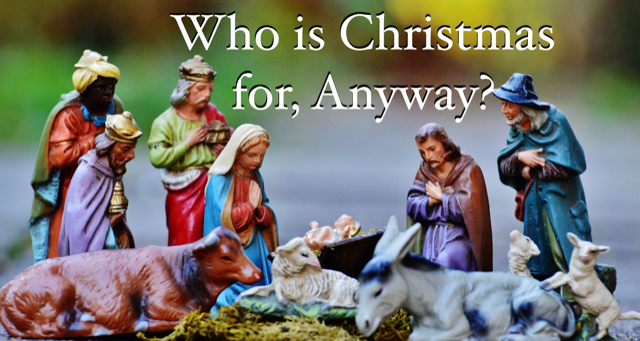
Who is Christmas for, Anyway?

IMG_8743Lots of retailers make a lot of money from Christmas sales. Major corporations enjoy record profits year after year at Christmastime. Marketers, delivery companies and small businesses count on big sales during the holidays to boost their profits and add to their bottom line.

But is this who Christmas is really for?

We have a problem with the commercialization of Christmas. For too many, the holy season has simply become a money maker. We tire of the incessant commercials, the pushy salespeople and the “special holiday offers.” If we’re not careful, we can develop a bad attitude about the season because so many are corrupting the true meaning of Christmas; Let’s not do that!

Let’s remember who Christmas is for:

Christmas is for children: The little boys and girls of the world who simply embrace the excitement of the holiday.

Christmas is for Christians: the Christ-followers around the world who humbly celebrate the birth of their Lord, Savior and soon-coming King!

Christmas is for families: though perhaps spread across the miles, they hope to be together to share special moments and memories.

But…

Christmas is also for the lonely: those who have no one during the holiday.

Christmas is for the hurting: those who are in physical, emotional or relational pain.

Christmas is for the bound and addicted: those who have no concept of freedom.

Christmas is for the hard-hearted: those who have been so hurt, they refuse to trust again.

Christmas is for the doubters: those who refuse to believe.

Christmas is for the rebellious: those who feel the need to run from God.

Christmas is for the lost: those who just can’t find their way through this dangerous world.

Christmas is for sinners: those who have yet to accept Christ as their Savior and Lord.

Christmas is for those who need Good News!: Those who are tired of the ugliness and sin of this world.

Christmas is even for those who miss the point entirely (they think it’s about making money): God doesn’t give up on them, we shouldn’t either.

God gave His Son, Jesus Christ, as the Way, the only Way to salvation.   

She will give birth to a son, and you are to give him the name Jesus, because he will save his people from their sins.” (Matthew 1:21) These words, spoken by an angel to Joseph, speak to us about the eternal Good News of the birth of Jesus. Jesus came to preach the Gospel (Good News) to all people! This means that Christmas is for everyone! Christmas is Good News for all of us!

This Good News of Christmas triumphs over the bad news. This Good News of Christmas heals the brokenhearted. This Good News of Christmas brings families back together. This Good News of Christmas comforts the lonely. This Good News of Christmas brings hope to the hopeless, joy to the sad, and the promise of a better future to a world that desperately needs it.

But it is not the presents, the money-spending, the holiday stress that brings what we need.

The love that God displays at Christmas is what makes Christmas belong to all of us.  

 Merry Christmas to you. We love you, thank God for you and pray that this Christmas season will be especially blessed!


What are We Good At, What are We Not?

design-48Definitions for this article:

  1. Product: The Gospel of Jesus Christ.
  2. Promotion: Marketing or advertising the Gospel.
  3. Presentation: The method utilized to deliver the Gospel.
  4. Productivity: The positive results of the Gospel of Jesus.

We don’t have a product problem. We don’t have a promotion problem.

We have a presentation problem. Because of this, we have a productivity problem.

While visiting a large suburban mall, I noticed that the Apple store had relocated. They had outgrown their space and moved to a larger spot in the same mall. In a few moments, we walked by their new location. But here was my surprise: they had yet to put up their sign. There was no indication anywhere on the outside that this was the Apple store. I wondered about their decision to open the new location without first putting up the sign. But, as you can see, everyone knew exactly what store it was – the place was full; business as usual.

Apple has great products. They’ve done their promotions. Their presentation is unquestionably effective. Of course their productivity is unparalleled. They have been so good at what they do, the temporary lack of a sign had no negative effect whatsoever.

I don’t work for Apple; I work for the Church.

Let me say, church signage is very important. Like it or not, we must brand our churches. We must market the ministry. In our culture, if people don’t know about us, they aren’t coming. But I don’t believe our biggest issue (why more people don’t come) is promotion.

I know for sure that our product (the Gospel of Jesus) is the most valuable and important product ever.

I believe we have two problems that we should address and solve:

  • Our presentation suffers sometimes. The way we communicate the most important product is sometimes subpar. A lack of quality, ill prepared sermons and worship services, and ignoring the needs of our “potential audience” can really hurt our efforts. Our “potential audience” is our unsaved community. Churches that operate in ways that disconnect them from their unsaved community will suffer.
  • Our productivity is stifled. In many churches, very few people are coming to salvation in Christ. The harvest is sitting in the fields. This is a major problem.

I would remind you that the product needs no adjustment. The Biblical Gospel can stand for itself. I would also suggest that better promotion might not be the answer. If our presentation is poor, the best promotion in the world won’t help. The fact that our productivity is suffering is enough to cause us to evaluate and adjust our presentation.

Pastor, don’t change the product. Go ahead and improve your promotion. But if your productivity is less than you desire, invest in changing your presentation.

We’re not Apple. But wouldn’t it be cool if our presentation of the product was so amazing that promotion wasn’t necessary? It’s possible!

We don’t have a product problem. We don’t have a promotion problem.

We have a presentation problem. Because of this, we have a productivity problem.

Focus on your presentation of the most amazing product ever, and productivity will take care of itself.

Do You Need a Mentor?

design-45Phil Pringle, author of “Top 10 Qualities of a Great Leader” has a very good idea. He says, “Mentoring is vital to success. However, this involves more than just chatting with a more experienced person. The mentoring relationship is opened up through serving. People sometimes ask me to mentor them. All they need do is help me do what I do, and they’ll find themselves in my world. They’ll learn more by serving than by any other means.
A good “mentee” makes a great mentor. No matter how good a person’s coach might be, if the person has no heart to serve and to learn, then they will fail to be coached.”
What a great idea! We learn best through serving. Rather than asking to have coffee once a week with a coach (that is also a great idea), how about if we request how we can best serve them? Instead of looking to a mentor to answer all of your questions, listen while they labor. Dig ditches alongside them. Make their life easier by providing practical hands-on help where needed, Honestly most mentors are very busy people and, as much as they may love sitting and pouring into a younger leader, the idea of spending time just talking isn’t always practical.
I’ve always said, I do my best counseling while I am preaching. But I also have a lot to share while I am cutting the grass, painting a room or driving long distances to minister. Serving alongside a mentor is an organic way to learn from them. And by serving them, you are returning the blessing to them.
Serving is not as glamorous as deep conversation which is why it’s an excellent way to weed out people who only want to talk.
If you don’t have time to serve, you don’t have time to be mentored. If you have no interest in serving, you really have no interest in being mentored.
If you need a mentor, think about who you would select as a mentor. Then consider ways that you could potentially serve him or her.
We may be on to something really significant here!

Everybody Loves a Flashy Preacher!

design-39Or do they?

Sure, it’s fun to attend church when the minister is charming. If he/she dresses well and is in touch with culture and quotes current song lyrics, services are never boring. A good joke teller keeps you entertained. And it sure helps if the pastor is good looking!

If we want to attract a crowd (and who doesn’t?), we need a pastor who is articulate and confident. High energy presentations complete with multimedia elements, expensive stage sets and props, and impressive illustrations are required. Cool clothes, perfectly coiffed hair and an attractive spouse are non-negotiables.

I’ve seen some very good people be compelled to follow a pastor precisely because of these things. We have actually heard people say that they selected their current church because the pastor was so cool.

But wait a minute.

Pastors are spiritual shepherds. They guide and lead. They teach and train. They serve and sacrifice and work hard. They make disciples of Jesus. At least, that is the Biblical perspective of what a Pastor should be.

Flashy, exciting, showy, and edgy has nothing to do with sustainable, productive, stable and unrelenting. In order for ministry to succeed, we need more than a show.

While we shouldn’t criticize ministers who pay attention to style and current trends, we also shouldn’t confuse these things with being an effective preacher or pastor. One can look the part but not fit the part. In fact, it’s actually substantially easier to look cool than to be a strong pastor.

If your pastor loves you, knows and preaches the Bible, and can be counted upon to lead well, count yourself blessed. How he or she dresses shouldn’t be a deal breaker. While they may not be able to quote the script from the latest Hollywood movie, if they know you and lead you with integrity, you have a solid pastor.

Be aware than some who call themselves pastors, and may indeed hold that responsibility, never fulfill the responsibility. You may not realize that on a Sunday when the service is hopping. But let a crisis strike – you will then be able to distinguish between who is a Pastor and who is not.

A few necessary points:

  • An out of style preacher does not equate to an effective preacher.
  • Preachers and pastors should try their best to connect with their culture and community. This includes clothing style and awareness of modern entertainment.
  • Substance is to be valued more than appearance, but appearance cannot be ignored.
  • Pastors who think they have a “pass” on relevance because they are a pastor are mistaken.

Let’s not be shallow enough to follow a person because of their persona. Stage presence is overemphasized in some churches. Character is far more important.  Holiness is immensely more valuable than coolness. Give me a pastor who will laugh with me in happy times and cry with me in sad times over one who can put on a great show on the stage.

We shouldn’t want a flashy preacher; we should want a preacher who loves God, loves people and leads us to follow Christ.

Pastor: Smile!

IMG_5316The world is full of negativity. People are swamped with pessimism. Doubt, fear and pain paint the world in a pale shade of gray. People need some bright colors of Good News.

My wife and I recently visited a brief church meeting. The entire team of leaders was full of joy. They cheered one another on. They smiled and gave high fives. The atmosphere was electric with joy and expectation. What a wonderful ministry climate! Immediately, I found myself drawn into their joy. But I also realized how rarely I have been a part of an atmosphere such as that.

If we hope to reach our communities, churches must create a sense of hope and optimism. (Actually, God has already created that atmosphere; all we have to do is tap into it.) If we expect to attract unchurched people with a frown, we should think again.

It may sound elementary, but pastors must be positive. Let me give you a few easy ideas:

Smile when you see people. Make eye contact and be genuinely glad to say hello.

Smile when you talk, sing and worship. Looking as though you are in anguish is not necessarily godly, and it may send the wrong message to others.

Smile when you preach. Unless the topic of your sermon is sad or painful, a smiling face creates an atmosphere of well being and confidence.

If you raise your voice when you preach, be sure not to yell at people. You can be enthusiastic without appearing angry. Few emotionally healthy people are interested in being screamed at.

Ask your leaders to smile. Greeters, ushers, worship leaders, and children’s workers should be happy.

Consider a pre-service meeting to set the atmosphere of joy and happiness. You will find it is contagious – the atmosphere will be transformed.

Admittedly, leading a church is an arduous task. There are times that the burdens are heavy. It is easy and perhaps natural for us to become so serious in our efforts that we appear to be stressed and distressed. But a smile communicates inner peace and joy. Jesus brings us true joy and He wants us to share it with others. Marcus Aurelius said, “The mind reveals itself in the face.” What does your face say about what’s going on in your mind?

We may need to retrain ourselves and others. Old habits (frowning) are hard to break. But let’s encourage the people at our churches to take advantage of the nonverbal and body language signals we send to others.

So, here is a lovely Bible verse that communicates my hope for you: “May the God of hope fill you with all joy and peace as you trust in him, so that you may overflow with hope by the power of the Holy Spirit.” Romans 15:14

Let’s overflow with hope and joy, and observe the positive impact it has!