Healthy Pastor Healthy Church

13557721_10154376814459214_6871678460088746686_nIn order for churches and ministries to be healthy and productive, their leaders (pastors) must be healthy. When we think of health, we usually think only in terms of physical health; but a more holistic approach is needed. Too many of us limit our definition of health, and possibly limit our effectiveness in the ministry.

Let’s focus on our wellbeing in regard to a spiritual, relational, emotional, mental and physical point of view. Balance is needed in order for us to remain productive for the long term. The demands placed upon an individual by modern ministry are significant. We’ve all seen friends who did not survive the rigors of church leadership. It takes a strong person to remain active in ministry for many years. While we all agree that we must be spiritually healthy, let’s not ignore things like our physical condition. In today’s world of authenticity and transparency, we can appear hypocritical if we preach a Gospel that doesn’t include every aspect of our lives. If we are perceived as inauthentic or disingenuous, our ministries will suffer. If we are not growing intellectually, if our relationships are unhealthy, if we are unstable emotionally, our message will be hindered. Let’s fast and pray but let’s also gain education and work out.

Here is an idea to consider: these things are all connected. When we are healthy spiritually, our emotions, our health, our relationships and our mental capacities are impacted. We can’t truly say that we are healthy spiritually if we are ignoring vital aspects of our being. We can’t segregate the elements of our health. If the pastor is out of balance, the church will be out of balance. That’s what we call leadership.

Pastors, let’s take care of ourselves so that we can lead healthy and productive ministries but let’s also take care of ourselves so we can enjoy the benefits that God provides for healthy people.

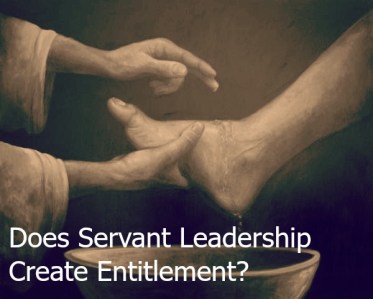
Does Servant Leadership Create Entitlement?

Does Servant Leadership Create Entitlement carterNo one can argue with the insistence that leaders be servants. Jesus modeled it and Greenleaf made a million writing about it. But there may be an issue.

Is there a connection between the rampant entitlement mentality that we see in our culture and leaders who humble themselves to serve others? I think maybe so.

Jesus washed the feet of the disciples. It is unthinkable that the Creator of all things stops to wash the crusty smelly feet of 1st Century fishermen. Unless you fast-forward a few days and observe Jesus hanging by nails on a cross. He did all of this for the purpose of serving the people He loved. They needed a Savior and He volunteered. Notice, He did not volunteer to do something they didn’t need. It would have been pointless for Jesus to offer to stay on earth to keep walking on the water or turning water into wine. They didn’t need that. But they sure needed a Savior.

We may have some indicators of the issue we are facing.

  • I believe that some servant leaders are serving in ways that are not really needed. Leaders who show themselves to be willing to do anything for the people they love are an inspiration. People are impressed when leaders sacrifice their own good for the good of those they lead. But if this sacrifice makes no difference, what’s the point? Example: The pastor of a church may refuse to be paid a salary in the interest of the financial constraints of the church. I have seen this happen. It may be a good thing. But it may result in people who renege on their financial responsibilities. By serving in a way that is not needed, the servant leader may be doing more damage than good.
  • I believe that some servant leaders are serving themselves. It’s tough to admit but some of us like the attention we get when we “serve.” People are beholden to a leader who is in the trenches, on the frontline. Independent people who can carry the load alone are heroes to many. But there are two problems here: the focus is on the leader and the people are taught to become dependent – they aren’t needed in the process. Healthy organizations involve multiple people. A servant-leadership approach that has ulterior motives is damaging to everyone involved. True servant leaders serve with pure motives.
  • I believe that some servant leaders are doing more harm than good. Mono-personality leadership is unscriptural. Lone leaders who do all of the work choke out the operation of Spiritual Gifts. Leaders who spend all of their time waiting on people while never moving them forward do God’s people a disservice. It is possible that a wrong perspective of servant leadership can severely damage an organization.
  • Some “servant leadership” is a veil for a leader’s weaknesses. Because of my introversion, I sometimes find it easier to mop the floors after an event than to speak face to face with people. Real servant leadership is sometimes just to be with people.

The goal of servant leadership must be to create more servant leaders. The goal is not for people to feel sorry for us or for people to talk about how noble we are. Leaders serve like Jesus because people need it.

Now, back to the original question: Is entitlement connected to servant leadership? Possibly. Many people feel they deserve something for nothing. The world owes them. We’ve got to combat this ideology. The best way to do so is to serve like Jesus served. Wash their feet; but teach them to wash the feet of one another. Otherwise, they think your job is to keep their feet from stinking. While someone needs to do that, it’s not on the leader.

Before We Throw Out That Tradition

IMG_2929I’ve never been a real traditional guy as tradition is considered in the church. In fact, I’ve spent the good portion of the last several years trying to enact change. It seemed as though many of the things that defined the church were actually a hindrance to what we were supposed to be accomplishing. Well, I must be getting older. I’m coming to the place where I am a little slower to eliminate older ideas. My young friends may call me a sell-out.

I came across a few Bible passages that have me thinking.


Paul said to the church at Thessalonica, “Therefore, brethren, stand fast and hold the traditions which you were taught, whether by word or our epistle.” (II Thessalonians 2:15) and “withdraw from every brother who walks disorderly and not according to the tradition which he received from us.“ (II Thessalonians 3:6b). The Greek word for “tradition” means instructions in Christianity. It’s the same word Paul uses in I Corinthians 11:2 “I praise you for remembering me in everything and for holding to the traditions just as I passed them on to you.” Some more modern versions replace the word “tradition” with teaching”; still many say “traditions.” For this article, I’m going to use the idea loosely to mean: “the way we’ve been taught to do church.”

Here is the point of this post: There are traditions in the church that should stick around. Simply because something is traditional doesn’t mean we should get rid of it!

Let’s be clear; if it is harmful, get rid of it. If it is damaging, stop it now. If it impedes the fulfillment of the mission, it is your responsibility to purge it.

However…

If a tradition is not harmful, it may be helpful to just hang on to it.

Here is the problem. Some things that, a few years ago, I thought were harmful turned out to be helpful. But they’re gone now. An example: in the 90’s, we minimized discipleship ministry (Sunday School, etc.) and focused more on worship. We’re living through the results of that now when Biblical illiteracy is at an all-time high. Another example may be eliminating evening and midweek services. While times have changed, we now find ourselves struggling to get people to attend services once or twice a month. There was a time in my ministry that I thought eliminating these things would help us. Turns out, we should have held onto the traditions and revitalized them.

But some of us are absolutely certain that we know what is best for the church, both now and in the future. Please allow me to challenge your thinking for a minute.

Dare we be so presumptuous as to assume that we presently have all the knowledge that we will ever need?

We have gotten rid of some things that, at the time, didn’t seem valuable. We now realize that they were. Surely we will keep growing in knowledge and wisdom. It is remotely possible that one day, we will realize that way back in 2016, we didn’t know as much as we thought we did.

We find ourselves in a culture where people are longing for the tried and true. Predictability and stability aren’t as old fashioned as they used to be. Liturgy, ritual and tradition are making a comeback.

A message for emerging leaders: please don’t discard the things your elders worked so hard to achieve. You may not see value in them now, but one day you might. Then, if they are worthless, drop them. And one day, when you are an elder, maybe you will reap what you’ve sown and the kids will not kick your ideas to the curb.

Before we throw out that church tradition, slow down. Give it some time. Consult with an elder. If, after thorough examination and prayer it needs to be eliminated, you can do it then. But once it’s gone, it’s sure difficult to get it back.

Why We Must Invest in Young Leaders

design[2].pngThere is a lot of talk these days about why it is so difficult for most people to connect with Millennials. They are complex, some of them have no interest in interacting with us and a few of them think they are entitled.

Of course they don’t have it all together. If they did, we would need them to teach us, because we certainly don’t have it all together.

Here are some reasons why we MUST invest in the next generation of leaders:

  • We won’t live forever; someone needs to be prepared to take over once we are no longer able to lead.
  • Some of us need to step aside before we are ready. One of the problems with growing older is our awareness of our effectiveness or ineffectiveness may be compromised. Let’s prepare younger people to lead before we reach the place of ineffectiveness.
  • Someone invested in us. We have a responsibility to pass on the valuable insight and wisdom that was generously given to us. To do otherwise is selfish. One of my favorite Bible passages is II Timothy 2:2 “And the things you have heard me say in the presence of many witnesses entrust to reliable people who will also be qualified to teach others.” I see four or five generations involved in the teaching process. Let’s follow that pattern and pass on what we know.
  • We love them. Because we care about young leaders, we will invest in them.
  • Because the church and other organizations need young leaders in place now and in the future. The current lack of leadership in our world is evidence that we need strong leaders to emerge.
  • We have things to learn from young leaders. They have a handle on some concepts that we must learn in order to be effective.
  • Because we are better together. Mono-generational existence is boring, unhealthy and unproductive.

I’m excited about the young leaders I know. They are authentic, bright and well-informed. If we do our part to help them get ready, the future will be in good hands. If you know anything that can make the world a better place and can prepare people for what is ahead, do your best to share it with those younger leaders who will then share it with others.

The Best Thing About My Faith Family

I have a great job! But it’s so much more than a job. My work is my calling.

design[1]A friend recently asked me about my favorite part of our work. I didn’t have to think twice about my response.

My favorite part of the ministry in which I am involved is not the meetings. I love my colleagues and my leaders but I’m not a big fan of sitting around a table and working through an agenda. I’m not especially fond of traveling. Crowded planes and long car rides wear me down. Dealing with bankers and attorneys and real estate agents can be taxing (sorry friends who serve in those roles). And, honestly there are a few things about my faith family that are difficult. There are politics. There are egos. There is conflict. Of course, these things are evident in all organizations.

But the best part of our faith family is the people. My wife and I have the distinct privilege of serving in a leadership role for our denomination. As part of our responsibilities, we travel to a variety of places and meet a lot of great people. Every place we go, we are reminded about how precious the people in our movement are. We meet so many hard working, faithful and competent people. Pastors, church leaders, church members…every place we visit we find a consistent batch of great folks who love God and are working hard to build His kingdom. I refer to them as the backbone of the church. They are by far the best thing about our faith family.

I find it interesting that a few people choose to leave our group. I have a couple of friends who have decided that they can do better. That is between them and God and I hold no ill feelings toward them. But unfortunately, the reasons I hear from my friends who leave are, in my estimation, shallow. The aforementioned difficulties usually make the list: too many politics, too many egos, too much conflict. I see what they are saying and I agree that these are problems. But here is my point:

The quality of the people makes the challenges well worth it!

I’m not blind – I see the problems. And many people I know are working hard on and making progress toward engaging solutions. But rising far above these issues in my mind are the men and women who make up my tribe. I refuse to throw away relationships with so many awesome people because there are organizational challenges. The more I travel and the more people I get to meet and work with, the more I am convinced, I’m in the best family on earth.

I’m thankful for my faith family; it’s a privilege for me to serve in this capacity. By the way, I am a part of the Church of God.

Minister’s Manual, 2016 Version. (This ain’t your grandma’s church!)

I was reading again Henri Nouwen’s classic, “The Wounded Healer.” His introduction mentions the need for a more relevant version of the old Minister’s Manual. The old ones were a sort of “how to” guide or “Ministry for Dummies” approach to local church functions. They were a very practical and helpful resource for younger pastors just getting started.

Traditional ministerial handbooks included sections on

Hospital visitation,

How to perform a wedding,

Conducting funeral services,

Administering the sacraments and so on.

Back in the day, a pastor could navigate his way through a variety of ministry situations with the aid of a good Ministers Manual. I have 2 or 3 on my shelf and they are collecting dust.

Today’s pastors certainly need to know the things expounded upon in these Manuals. But wow, has ministry ever changed!

I would suggest the need for an updated Minister’s Manual. But the chapter titles have to change to reflect real life situations that pastors face in a post/Christian culture. Some of the ideas below are an attempt at humor; some are more poignant. Some will only be grasped by pastors serving in a local church setting. But they all are a commentary on how the world and, therefore, ministry has changed.

ministers manual-1-1

Modern ministry manual:

Chapter 1: When to call the cops, when to run for cover.

Ch. 2: Addictions: Everybody’s Got ‘Em.

Ch. 3: Breaking up a Fight at a Funeral.

Ch. 4: Kevlar, the Pastors Best Friend.

Ch. 5: Mental Illness: The New Normal.

Ch. 6: How to Tell the Difference Between Crack and Heroin.

Ch. 7: Is that Elder Packing Heat?

Ch. 8: The Tatooathon Youth Fundraiser

Ch. 9: The New and Improved Bullet Proof Pulpit.

Ch. 10: How to Preach a Sermon Without Offending Everyone.

Ch. 11: Xanax, a Pastor’s Best Friend.

Ch. 12: Yes, it’s a “Please Me” Culture; Now Get On With It

Ch. 13: When Your Board has Your Back, but they’re All Carrying Daggers.

Ch. 14: How much is too much therapy?

Ch. 15: Just Say “No” to Talking to the Opposite Sex (and to some of the same sex.)

Ch. 16: “Don’t take it personal but I hate your preaching!”

Ch. 17: Keep your hands out of the Offering Plate!

Ch. 18: Why You Keep an attorney on Retainer.

Ch. 19: Can I Write Off my Punching Bag?

Ch. 20: How to Baptize Cats Without Losing a Eye.

Ch. 21: 3 Points and a Tear-Jerking Illustration in 15 Minutes or Less.

Ch. 22: Think you can Make at least One Person Happy? Think Again.

Ch. 23; How to preach like Andy, Joel and T.D. and still be True to Yourself.

Ch. 24: How to Compete with Youth Sports, nice weather, bad weather, the beach, the boat, sickness, health and a thousand other things that keep people out of church.

Ch. 25; Leading People who Never Go Anywhere.

Ch. 26: When to empty your hate mail email folder.

Ch. 27: How to include every possible music genre in every worship service without anyone complaining.

Ch. 28 Yes, chronic insomnia is perfectly normal for Pastors.

Ch. 29: “Meat of the Word” Smoothies.

Ch. 30: Why people don’t believe it when you say, “your best days are ahead!”

Ch. 31 Preach the Gospel even if they kill you for it. And they might.

You get the idea. Ministry is different today than it’s ever been before. That’s because the world is different than it’s ever been before. I don’t think it’s necessarily harder than before. Recall, there have been Christian martyrs for 2,000 years. But for sure, these are unique times. Some of us are waiting for everything thing to get back to normal. My advice? Don’t hold your breath; it’s not going back.

Stay strong.

Don’t quit.

You are called to this moment.

God is faithful and He will come through. We don’t know for sure what that means but we know He will come through.

Hang tough modern pastor!

What do you think? Do I have a new Ministers Manual in the works?

Leadership Discretion Advised

Leadership Discretion AdvisedA few years ago, I posted a light-hearted social media comment about my favorite sports team that was headed to the World Series (go Cardinals!) I jokingly inferred that I might pray about getting tickets to one of the games. I thought very little of it (first mistake) and assumed it was humorous (second mistake.) Shortly thereafter I receive a private message from a colleague who is a few years my elder. He wisely advised me to consider the people I lead as regarding my recent post. His comments went something like this: “Recall that there are men under your leadership who are having a difficult time taking adequate care of their families because of financial limitations. Some are working two or three jobs to pay the bills. Also consider that these families sacrifice some of their income to send contributions to our denomination to support our leaders, like you. Considering the extreme cost of attending a World Series game, some of your team members may be offended that you are willing to spend so much money on a ball game when they can’t buy their kids new shoes. I would encourage you to use great discretion. You have influence, you don’t want to waste it.”

Wow! This man was a true friend that cared enough to share valuable wisdom with me. I received it and thanked him. That has been a couple of years ago but I still recall the conversation, often. I realize that some will come to my defense, will think that this guy should mind his own business and that I have the right to spend my money the way that I want. But, as a leader, I disagree. I must be conscientious. I must be aware of others. I must be willing to sacrifice some of my liberties if I am to be an effective leader. I must use discretion. If you feel as though what you do is no one’s business, you need to take a look at Biblical leadership and Christianity in general. We are responsible for and accountable to one another.

Just last night, I was making some observations on Facebook about a very popular football game. I was trying to make some life and leadership analogies by pointing out the failures of a particular player. You guessed it; some people were upset and offended. I now had three choices: defend myself and blast those who were offended, ignore those who were offended, or apologize. I chose the latter and removed my post. Like it or not, my role as a leader is more important than nonsense talk on social media.

As leaders, everything we do is examined under a microscope, as well it should be. The Scriptures tell us in James 3:1 that leaders (teachers) are held to a higher standard. Of course there can be excesses with this idea and some only want to place impossible expectations on those in authority. But the principle remains true: anyone who wants to lead must be willing to use a different filter for decision-making. Don’t misunderstand – there are issues of morality that we must defend regardless of who agrees. However, the nonessential issues that sometimes separate people are just not worth it.

Leaders are entitled to opinions about everything but it is immature and arrogant to share every opinion one has. As the leadership level increases, so the level of filter needs to increase. Think about this: you only get so much input into the lives of others before they lose interest or they tune you out. What kind of information is worthy of your influence?

I can be right. I can be informed. I can even out-argue some people. However, there is a bigger concern. As a leader, how am I influencing my constituents?

My advice to you? Use great discretion. By the way, you are entitled to disagree with my idea, just use discretion when expressing your ideas. I’ll keep working on it from my end.

Leading with Contrast

leading with contrastSome things to look for:

  • Being counter-cultural.
  • What if no one follows?
  • How should we to measure success?

Read: Matthew 5:13-16 “You are the salt of the earth. But if the salt loses its saltiness, how can it be made salty again? It is no longer good for anything, except to be thrown out and trampled underfoot. 14 “You are the light of the world. A town built on a hill cannot be hidden. 15 Neither do people light a lamp and put it under a bowl. Instead they put it on its stand, and it gives light to everyone in the house. 16 In the same way, let your light shine before others, that they may see your good deeds and glorify your Father in heaven.”

My initial reaction when reading this passage from a leadership framework is to be reminded of the call to be an agent of contrast to the world in which we live. It is tempting to fall into a pattern of fitting in with our surroundings rather than being counter-cultural. Going with the flow comes naturally to most of us. As Christian leaders, we should not expect to be accepted or honored for our faith and we surely shouldn’t be surprised if our faith costs us. We have to be different and we have to be ready to deal with the fallout when we are different. The world doesn’t need us to be like everyone else – the world needs us to be like Jesus.

Jesus’ words are pertinent for leaders today because we struggle with the need for people to follow our leadership. We are called by God to lead others; when we do not have constituents, it is difficult (ok – impossible) to lead. The temptation when followers are few is to lower the bar of what it means to be a follower. Many leaders have come to the conclusion that if the rules eliminate people, we can just eliminate the rules. The problem with this approach is leaders become liable for misleading followers. We must never compromise our Biblical approach to leadership in order to gain followers. Remember, your success as a leader is not a matter of the numbers of people you lead but rather the life-change that is being experienced by those you lead. While this may not be a new revelation to you, I hope it is a refreshing reminder of our priorities and expectations as we move forward into an uncertain future.

What do we do with this info? My plan of action is to try to measure my leadership effectiveness, not in consideration of quantity but rather quality. Let’s avoid the trap of thinking that bigger is always better. A good analogy may be your choice of restaurants. You can chose a cheap buffet where you can eat all the bad food you want or you can chose a gourmet restaurant with world class food. If it’s one or the other (and if someone else is paying!), I’ll take the gourmet food every time. Hopefully, in life and ministry, it is not one or the other. I believe that if we are diligent to lead with contrast, God will take care of the increase of our influence.

Lead with Contrast. Be the difference the world needs.

Be encouraged and lead on!

4 Essential Elements of Leadership

design[31]

I am delivering this lesson tomorrow to a group of ministry leaders. Rather than limit it to one presentation, I thought it may be helpful to readers of this blog.

Leadership is a trust. I Corinthians 4:2 “Now it is required that those who have been given a trust must prove faithful.”

Like other spiritual gifts, leadership is a gift from the Holy Spirit. Romans 12:8 “if it is to encourage, then give encouragement; if it is giving, then give generously; if it is to lead, do it diligently; if it is to show mercy, do it cheerfully.”

The spiritual gift of leadership is closely related to the gift of administration and, interestingly, the spiritual gift of pastor/shepherd.  The Greek word for the spiritual gift of leadership is proistemi.  This word means to lead, to assist, to protect and to care for others. http://www.spiritualgiftstest.com/spiritual-gift-of-leadership

The gift of Leadership is the God given ability to lead people to accomplish God’s vision and goals. The biblical image used when describing leadership is “shepherd”. A Shepherd does not force his will upon the sheep, rather he tends and cares for them. The sheep instinctively follow a good shepherd. Jesus describes himself as the “Good Shepherd”, and calls Church leaders his “Under Shepherds”. The “Under Shepherds” must faithfully follow the example of the “Good Shepherd” and lay their lives down for the welfare of the sheep (John 10:14-18). The person gifted by God with Leadership abilities, will display the same servant leadership principles evidenced by Jesus and the Apostles. (http://www.assessme.org/about/spiritual-gifts/leadership.aspx)

Like with others gifts, God expects us to nurture, explore and utilize the gift of leadership for His glory.

We have become stewards of the gift of leadership. We must make the most of it, as ones who will give an account to God. See the parable of the talents in Matthew 25:14-30. (If you don’t use what you’ve been given you may lose what you’ve been given.)

Are leaders born or made? “Leaders are neither born nor made. Leaders are summoned. They are called into existence by circumstances, and those who rise to the occasion are leaders.” (Leonard Sweet – Summoned to Lead)

Let’s be the best leaders we can possibly be for God’s glory!

 4 Essential -(imperative, indispensable, necessary_- Elements of Leadership:

Note that the title is 4 Essential Elements – not THE 4 Essential Elements. There are many more! In his book, Spiritual Leadership: Principle of Excellence for Every Believer, J. Oswald Sanders lists: discipline, wisdom, decision, courage humility, integrity and sincerity, humor, anger, patience, friendship, tact and diplomacy, inspirational power, executive ability, etc.

  1. Authentic

(adjective: not false or copied; genuine; real.)

Synonyms: credible, real, genuine, legitimate, pure, reliable, trustworthy.

design[30]

Paul’s declaration of authenticity: “Those things, which ye have both learned, and received, and heard, and seen in me, do: and the God of peace shall be with you.” Philippians 4:9

“Followers trust leaders to lead. When leaders don’t lead, followers stop trusting their leaders.”

There is no leadership issue more important than trust. Without trust, we are not leaders.

Trust is fragile: it takes a lifetime to build trust and only a moment to lose it.

For discussion: Name some things that can compromise our authenticity:

  1. Visionary

The ability to look forward to God’s plan.

design[28]

Leaders must be solutions oriented; anyone can point out problems, it takes a leader to fix them.

“The term vision is a key buzzword in today’s ministry world.  I believe that vision is vital to your people seeing what “could be” – what our great God can accomplish through them (Eph. 3:20) in your ministry community.”  (Aubrey Malphurs –Advanced Strategic Planning)

Leaders must 1) accurately assess the current situation of the group they are leading, 2) discern where God wants to take the group and 3) implement the best plan in order to get the group there.

Vision is not just a pipe dream. Vision isn’t fantasy. Vision is not wishful thinking. Vision is hard work, directed by the Spirit, demands great sacrifice, requires faith and embraces risk.

Three of the most renowned Biblical visionaries: Moses, Nehemiah, Paul.  Study their leadership!

Visionary leaders must have foresight. “A mark of leaders, an attribute that puts them in a position to show the way for others, is that they are better than most at pointing the direction to go. Foresight is the “lead” that the leader has. Once leaders lose this lead and events start to force their hand, they are leaders in name only.” Robert K. Greenleaf

Leaders, ask of the group you lead…

  • What is?
  • What could and should be?
  • What will it take to make it happen?

For discussion: What are some of the things that may prevent leaders from being visionary?

What are some Biblical responses to these things?

  1. Industrious

 design[29](Paul) II Thessalonians 3:7-8 “For you yourselves know how you ought to imitate us, because we were not idle when we were with you, nor did we eat anyone’s bread without paying for it, but with toil and labor we worked night and day, that we might not be a burden to any of you.”

“A dream doesn’t become reality through magic; it takes sweat, determination and hard work.” (Colin Powell)

It is reasonable to expect full time ministers to work 50 or more hours per week.

Make the distinction between selfish ambition and godly ambition.

“Pastors of 50 or fewer people – if you work and pray as though you have 100 people, you may soon have.”

We must guard against time wasters: (social media, non-essentially long meetings, extended lunch or coffee breaks).

It is necessary to not only work hard, but to also work smart. Learn to utilize tools and innovations such as the Internet, teams within the church, and resources from other pastors/leaders.

Be diligent in your work for the Lord. We cannot hide laziness!

 For discussion: What things might contribute to the reputation that pastors are not hard workers?

  1. Spiritually Deep

 design[27]

I Corinthians 11:1 “Follow my example, as I follow the example of Christ.” (NIV)

“And you should imitate me, just as I imitate Christ.” (NLT)


One of the most sobering identities of a leader: Example. People actually follow!

 Remember: As goes the leader, so go the followers.

“If the preacher always preaches shallow messages, the church members will never learn how to swim in the deep waters.“

It has been said, “Whatever you see exemplified in church members can be traced back to the pastor.” While there are exceptions to this statement, there are elements of truth to it.

A few indicators of spiritual maturity:

  • Stability – we will not be wishy-washy in our spirituality.
  • Humility – we think of ourselves less and others more.
  • Practicing sound doctrine – Not prone to flaky theology or bandwagon gimmicks.
  • Thick skinned (Not easily offended) – it is hard to hurt our feelings.
  • Faith – God has proven Himself over and over, we do not doubt Him!
  • Persistence – we refuse to quit.

For discussion: What must we do in order to assure our spiritual stability?

Conclusion:

Are you as effective as a leader as you would like to be?

In what areas is God speaking to you about your personal leadership development?

What is your plan of action?

Leader’s Devotional

design[25]This morning, I was praying for my grandbabies for the New Year. I was asking God to keep them safe and trouble free. I never want to see them suffer for any reason. Then the thought struck me – how will they be strong; how will they be prepared for what God has ahead for them in the future if they never have to endure any trials? I (reluctantly) began to ask God for His will for them, that He would prepare them to do awesome things for Him in the future. Because I am not naïve, I realize that, if we never struggle in life, we will be weak. I don’t want that for my grandbabies or for anyone I love.

Phillips Brooks said, “Do not pray for easy lives. Pray to be stronger men. Do not pray for tasks equal to your powers. Pray for powers equal to your tasks. Then the doing of your work shall be no miracle, but you shall be the miracle.“

Leaders – God has plans for you. They will require that you are strong and equal to the task. The only way to get strong is to endure difficulties, learn from them and grow.

Meditate on this verse: “But the God of all grace, who hath called us unto his eternal glory by Christ Jesus, after that ye have suffered a while, make you perfect, stablish, strengthen, settle you.” – 1 Peter.5:10

Don’t be discouraged by the difficult times you are enduring or the ones that are ahead. If you remain strong, learn from your environment and trust God – you will be ready for whatever comes your way in the future!

Relational Leadership: Growing Beyond our Organizational Bureaucracy

IMG_021450 years ago, people were perfectly happy being treated like a number. Employees were expendable and assembly line workers were interchangeable. If you expected to be affirmed by your employee, well, that’s what a paycheck was for.

Today’s team members want to be valued beyond their monetary compensation; they rightfully expect to be treated with respect. Leaders can no longer be perceived as dictators. The days of the intimidating boss are fading and employees will no longer tolerate a company that undervalues their workers. In fact, most people no longer want to be seen merely as a worker or a cog in a corporate machine; they prefer to think of themselves as team members, vital partners, an important piece of the larger mosaic. Leonard Sweet says that, “people possess a desire for a higher purpose – a mission that will change the world.” By connecting with your organization, they can participate as a key component in a bigger mission.

If you are a leader, you must connect in a relational way with your team members. If your organization is too large for you to offer hands-on care for everyone, you must structure so that someone is doing hands-on care for everyone. Individuals matter!

Allow me to clarify a few things that are often mistaken for relational leadership:

  • Telling you what you want to hear. We must care enough to challenge one another to grow. Stretching is uncomfortable but a necessary part of personal and organizational development.
  • Always agreeing. Just because I disagree with you does not mean that I am a “hater”. Sometimes my love for you compels me to disagree with you. Relational leaders care enough to lovingly confront when necessary.
  • Presuming your leader to be all things to all people. We must have reasonable expectations. If your leader has 10 or more direct reports, she may not be accessible every time you need her. An extremely high capacity leader may be able to effectively connect personally with 50 or more people but you must not place them under extreme performance expectations as they relate to accessibility.
  • One-sided relateability. Relational leadership is a two-sided coin. If you expect your leader or team member to initiate every conversation, you need to further study communication. Two-way care is required. (Part 2 of this post will address relational followership.)
  • Organizational acquiescence. While modern thinkers need to know they have influence, they cannot expect everyone to instantly comply and conform to their ideologies. Regardless of how impatient we may become, deep influence and trust takes a lifetime to earn.

However, any leader that plans to remain effective must assume responsibility for building authentic relationships with their associates. People must know that they matter more than the organization. Regarding connectivity: as goes the leader, so goes the team.

We must grow beyond our organizational bureaucracy. In order for institutions to continue to survive they must embrace a systemic relational ethos. If you find yourself in a leadership conundrum where morale is low but angst is high, try making more relational investments in the lives of team members. Strategically and intentionally provide emotional equity; let them know you care!

You are important far beyond what assets you bring to your organization. Your value as an individual and friend far exceeds the contributions you make to the institution as a colleague, associate or employee. Relational leadership will affirm this over time.

On a more personal note, the organization that I serve (the church) is experiencing great transformation in the area relational leadership. Much of our structure is being evaluated and adjusted. We have as our model, the Lord Jesus Christ. He always put people ahead of the institution. In fact, the purpose of His structure was to serve individuals. The church must lead the way in growing beyond our organizational bureaucracy and embracing relational leadership.

(Len Sweet, Summoned To Lead)

Smart Things that Churches Should Do

Smart Things that Churches Should Do

Church is not a building or an institution. Church is people. Because church is people, we have the choice to either do smart things or dumb things. If we do smart things, more people can be led to Christ. Leading people to Christ is a simple way of describing why the church exists.

Here are a few smart things that churches can do that will lead more people to Christ:

Be intentionally multigenerational
Youth are not the church of tomorrow; they are part of the church today. We must provide the resources necessary to reach them now. Quality leaders, authentic compassion and giving them a voice in the ministry process will result in young people who connect with the church. Smart churches know this; they don’t just talk about it, they do it. They invest in young people. But they also respect older people. Those who have paid the price to help get us where we are now need to know that they are treasured. Smart churches value people even if they appear to no longer be on the cutting edge. Smart churches value all generations.

Stay out of ruts
Doing something simply because that’s the ways it’s always been done is the fast track to extinction. Hold to traditions and creeds but do so with purpose. Smart churches change in the right way at the right time for the right reasons.

Stay off of bandwagons
We always have something to learn from others who are succeeding but trendiness and fads can spoil ministry. It appears that God blesses different methods at different times but He doesn’t run out of ideas. Imagination and creativity are spiritual gifts. Smart churches don’t spend a lot of time and energy trying to be another church. Be original, innovative, fresh.

Be real
Speak the language of the people. Do everything with authenticity. Operate with impeccable integrity. Own up to mistakes. Repent often. Be transparent. Smart churches are not manipulative or condescending or disrespectful of people.

Perfect grace
Make room at the table for sinners. Don’t demand perfection. Practice forgiveness and model second chances. Smart churches know that the ground at the foot of the cross is level.

Reach as many people as possible
It’s OK to have a “target market” based on demographics. But smart churches don’t eliminate people because they don’t fit the niche. Specialty churches eliminate people who are different. Jesus doesn’t eliminate these people – neither should we.

Act outside of the local church
Embrace other ministries. Do life in the neighborhood. Minister with a global mindset. Be sure to connect with people outside of your immediate circle. It’s a big world and God is doing amazing things. Smart churches don’t want to miss that!

Promote justice
Don’t tolerate the mistreatment of the innocent. Stand up for victims. Speak out on behalf of the marginalized. Smart churches act as part of the solution to society’s ills.

Release people into ministry
We should encourage people to practice their spiritual gifts. Empower people. Entrust people with responsibility. Smart churches understand that every person and gift is necessary for a fully functioning church.

Be comfortable with not pleasing everyone
Smart churches know that they are not for everyone. Let people disagree and let some leave, if necessary. Pursue those God has called you to reach.

Insist that people dream
Life beats the hope out of people. Smart churches spend a lot of energy building up people. Encourage them to dream again, to chase the vision that God put in them. “Remember who you wanted to be.”

Know what we’re supposed to do and do it well
What is the end goal of church? Jesus summarized our job description in Matthew 28 by telling us to make disciples; we help people by showing them how to be authentic followers of Jesus. That’s it. If we’re smart, we’ll focus all of our attention on that task.

Smart churches do smart things and lots of people come to Christ. You and I are the church. Let’s do smart things.

5 Ways Pastors Frustrate Church Members

5 Ways Pastors Frustrate Church Members

My last post, “5 Ways to Discourage Your Pastor” generated a good amount of interest. In keeping with that theme and in an effort to look at the other side of the issue, we are publishing this quick look at things pastors do that church members dislike. This is not a comprehensive list. It is not an attack on pastors. In fact, this list comes from my personal experience. The goal is to encourage both pastors and church members in ways that they can be more supportive of one another. The goal is unity in the church.

Here we go:

Don’t prepare for message. Pastors who “wing it” aren’t fooling anyone. Modern worshipers are savvy. They know when we have not given 100% in preparing for the message. It doesn’t matter if you’ve been preaching for 25 years; the church, and more importantly, the Lord deserves your very best. Pray, study, get ready! Preaching is a huge responsibility and it should be approached with utmost sincerity and preparation.

Preaching to those not in attendance. It is tempting to pour out frustration while preaching and many times it can be directed toward people who are not in the worship service. Here’s the thing: if the topic you are addressing only addresses the people who are not there, those who ARE there may regret their decision! Don’t preach your frustrations and do preach to those who are there.

Doing everything themselves. Some pastors are control freaks, some are insecure and some simply have not learned how to delegate. But many church members get frustrated when they see their pastor be the “jack-of-all-trades” at church. God has gifted every member of the body to contribute something of significance. Let’s let them.

Being unapproachable.
While it is not practical or even safe for all pastors to be available to members before and after worship services, no one likes to see a pastor whisked away after service like a celebrity. Pastors, make yourself available on some level. Remember that we are shepherds and we should know the sheep.

Make big changes, then leave. Name changes, vision/direction changes, building projects, incurring debt, hiring or firing staff…all of these big issues should be followed with an increased tenure on the part of the pastor. Don’t make someone else pay the price for your decisions. If possible, stick around and see the thing through.

To our former church members: I am sorry for the times I failed, and thank you for your patience.
To pastors: Do yourself and your church members a favor and assess this list. If no adjustments are needed, that’s awesome! If you need to tweak a few things, let me encourage you to do so.

By the way, this is round one. Another list of 5 is coming soon!

God bless you!

Photo by Jenny Kaczorowski

The Burden Bearer

The Burden Bearer

Long ago, in a faraway country village lived a hard working people known as the rock carriers. Their job was to remove the large stones that blocked the village farmers from plowing their fields. Day after day, year after year, the rock carriers labored at the heavy task of carrying these large stones out of the fields all the way to a distant valley. This was very hard work and the rock carriers grew tired. One day, the rock carriers were delighted to see one of their very own, a young boy, begin to grow and exhibit great strength. As he grew taller and his shoulders grew wider, the rock carriers began to have this strong young man carry their rocks. One by one, they piled their stones onto his shoulders. The larger he grew, the more weight he could carry. He was strong, he could handle the load. He worked tirelessly. Soon, the entire group of rock carriers relied on this one strongman to do their work. They became lazy. And he became tired. Yet they continued to stack up the rocks on his shoulders. After many years, they noticed that the strongman was walking slower now. He began to stoop over while he walked the road to the distant valley. This was no problem for them; in fact, it was easier to just place the rocks on his back rather than all the way up on his shoulders. He was saving them even more work. As the days passed, the strongman stooped farther and farther, until one day he was looking straight at the ground. He was completely doubled over. The villagers continued to pile on their rocks. They hadn’t noticed that the strongman was no longer moving forward. All they knew was that he was such a helper, their lives were so much easier now. The rocks continued to pile up until one day, someone noticed that the strongman had disappeared. How dare he take a day off? Had he gotten lazy and abandoned them when they needed him the most?  So the village rock carriers had to start carrying the rocks again. But they had to carry the rocks all the way around the huge pile of rocks that was now in the middle of the village road. How rude of the strongman to leave the rocks there!

Come to me, all you who are weary and burdened, and I will give you rest. (Jesus) Matthew 11:28

A Dirty Pulpit

dirty pulpit


For those who don’t speak churchy language, a “pulpit” is a piece of furniture that is sometimes utilized by preachers in a church. It holds a Bible and is usually placed front and center of the stage or platform. Other names for the pulpit are podium, lectern, or rostrum.

Recently, I was involved in a project at a church where we were moving some furniture around. I noticed that the pulpit had a lot of dust on it, mostly around the base at the bottom. Obviously it had been some time since the janitor had given it a cleaning. This is not an indictment of the janitor. In fact, I think those guys are the unsung heroes of most churches. I’ve always said that the best possible pastoral training is to serve as a church janitor for a while.

When I saw the dust on the pulpit, it struck me. I thought of what the desk represents: sacredness, purity, preaching the Word of God, the voice of God being heard by the people.  But the dust spoke to me of humanness, of failure and of sin. It is ironic that God chooses such imperfect people to represent and communicate His perfection.

Some people expect a perfect pulpit (or pastor). There is no tolerance for mistakes. There are too many stories of preachers who have sinned. Although gross immorality happens only in a minority of churches, these stories get a lot of coverage in the press. Truthfully, however, there is proverbial dust on every pulpit. Every pastor has a struggle. To err is human.

Regardless of how hard we try, we are covered with dust. Preachers can do the work of God with diligence, yet we are still guilty of sin. This is not an excuse to sin; and be reminded that the standard for Christian leaders is higher than for everyone else (see James 3:1). Pastors, never approach preaching with unconfessed sin in your life. If you are not a pastor, pray for your pastor. But we must be aware that God works in spite of the dust in our lives. We can’t tolerate the dust or accept it as the norm. We’ve got to clean ourselves often. However, part of the wonder of God is that He selects you and me to be His messengers – dust and all. Amazing.

People-Growing (for church leaders)

People GrowingGod has called us into the most wonderful work in the world! Much of what we do can be compared to what a farmer does. He grows crops; we grow people. He reaps a harvest of grain or vegetables; we reap a crop of souls.

Like farmers, pastors must know the purpose of their work and we must be willing to do whatever it takes to produce disciples. Fulfilling the Great Commission (Matthew 28:19-20) is not an option for today’s church leader!

In order for us to have success as “people growers”, we must:

Be intentional. Discipleship and spiritual growth among your church members does not “just happen”. If there is not a specific plan, our church will not grow. Conducting church services is not enough. We must engage the people in an intentional and consistent plan of personal spiritual growth. There are many simple plans available; develop one or find one and get your church involved. What is your plan?

In order for us to have success as “people growers”, we must:

Be willing to measure our success. Numbers aren’t everything but they do measure our progress. Attendance = real lives. If we are not reaching more people now than we were a few years ago, it is time for an adjustment. Refusal to deal with the bottom line (disciples being made) will lead to failure in the ministry. Go ahead and answer the question, “what do our numbers say about our discipleship process?” Are adjustments necessary? If so, what adjustments?

In order for us to have success as “people growers”, we must:

Be skilled. The Bible instructs us to study to make ourselves approved unto God ((II Timothy 2:15). If we expect the people we lead to grow, we must also grow. I recommend that each of us read various authors on the topic of spiritual growth. We need to feed ourselves outside of the church services we lead. We must worship and pray and fast. It may also be beneficial to learn from others – consider a coach or mentor who can help to develop you as a leader. If we grow as leaders, those we lead will also grow.  What is your personal growth plan?

In order for us to have success as “people growers”, we must:

Be diligent. James 5:7 says, “See how the farmer waits for the land to yield its valuable crop, patiently waiting for the autumn and spring rains.” We cannot be in a hurry to grow people. It talks a lot of plowing and planting and watering and fertilizing. There are no shortcuts! But we cannot be satisfied if we have had no harvest for years. God works through seasons – when is our season to harvest people? It must be soon!

In order for us to have success as “people growers”, we must:

Be aware of our accountability. We should be accountable to one another. We should be in cooperative relationships with those in our faith family. But we WILL give an account to the Lord for our productivity or lack thereof in the field of souls. The field belongs to God. The people are His. The Ministry is His. We don’t want to stand before Him empty handed. We certainly desire to stand before Him one day and hear Him say, “Well done good and faithful servant”! (Matthew 25:21).

Don’t Blame Me, I’m Just the Leader

don't shoot me

Hey leaders, when something goes down within your organization, don’t let people blame you.

Step up and blame yourself!

That’s right. Leaders don’t run from blame and they certainly don’t blame other people. Leaders accept the responsibility for the need for change and they lead it! That’s what leaders do.

Leadership guru John Maxwell says, “Everything rises and falls on leadership.”  There have been times in my career that I have hated that adage. When things are going poorly and the team is not producing, I want to point at someone else and take the pressure off of myself. But it’s my job to lead the team into success. With certain qualifiers, as goes the leader, so goes the team. There will be times when someone else messes up. As the leader, we must be strong enough to shoulder the blame and do what it takes to correct the direction.

I heard a ministries consultant take another angle: If you’ve been at your current appointment for at least 3 years, you own every problem. You can no longer place the blame on your predecessor.  You’ve been there long enough to address it. As the current leader, it’s your duty to deal with it and fix it. We can’t exonerate ourselves from it or abdicate our responsibility.

Let’s use Jesus as our example:

In John 18:10, Simon Peter cut off the ear of Malchus. Jesus rebuked Simon and healed the guy’s ear! He explained that His kingdom was not one of violence.

In Matthew 17:24-27 Peter commits Jesus to paying taxes without consulting Jesus. Again, Jesus fixes the problem.

In Mark 9:14-29, Jesus’ disciples failed to remove a demon spirit from a boy. Jesus took care of the issue and set the boy free.

Notice something – not only did Jesus accept responsibility and fix the problems, He also showed His disciples how to prevent the problems from being repeated. He utilized them in the solution, training them for the future.

I love that! Real leaders are willing to meet a challenge head-on. They do whatever it takes to correct the crisis. They utilize the problem to train their team. And as a result, the team grows in its abilities.

So once again, when something breaks in the organization, don’t find someone else to blame. Just lead the change. That’s what leaders do.

The Pressure is Good for You

images-123Who am I trying to kid? Stress kills, we all know it. Heart disease and addictions and insomnia – with results like these, it’s not sounding all that healthy now, is it?

Zero in on this: When managed properly, pressure makes us produce. Whether the squeeze is a quota to meet at work, a relationship to mend or a temptation to whip, the expectation that we will do well increases the likelihood that we will do well.  It’s in the nature of most of us to want to succeed at the things we try. Those who avoid pressure in all forms are trapped in a rut of intimidation. We need a little pressure to squeeze us out of these ruts.

There are some keys to keeping pressure healthy and to managing the amount of stress that works for our good.

Know how much is enough. You have to be aware of your trigger points. What are the signs that it is getting to you? Just this side of that, back off.

Be in control of it. Never let the pressure control your life. You call the shots, you be the boss of the pressure, not the other way around.

Take a break. Even non-geniuses know you need to vacate sometimes. A daily 20-minute power nap may do the trick or you might need a cruise from time to time. All work and no play makes Jack act like an idiot.

Share the load. One guy can do the work of two but two can do the work of five. Synergy is the principle at work here. Learn the skill of teaming up. The pressure sinks and the productivity skyrockets.

Measure the results. Note where you are now and note where you are after an especially pressure-filled season. You should be markedly ahead. If not, either the pressure managed you or it was unnecessary pressure in the first place.

Come on and admit it – the pressure brings out the best in you (if you don’t let it kill you first!).

Put into play this solid verse from the Bible:  “No test or temptation that comes your way is beyond the course of what others have had to face. All you need to remember is that God will never let you down; he’ll never let you be pushed past your limit; he’ll always be there to help you come through it.” I Corinthians 10:13 (The Message)

Get Over Yourself and Ask for Help

images-118

I am being recalibrated. Until 6 months ago, I had enjoyed the kind of work and ministry that didn’t often require me to request the financial support of those around me. As a pastor of a local church for many years, we relied solely upon the generous donors in the church. They did this out of obedience to the Bible and commitment to the vision.

Now, as the leader of a ministry that requires the support of others in order to survive (a “mission state” for our denomination), I am compelled to ask outsiders for help. Interestingly, they are giving it. I am humbled and blessed to be a part of a faith family that believes in us and wants to invest in our future. I am learning how to ask for help.

This (the asking) does not come naturally for me. I still struggle to ask for money. But because I believe in what we are doing, I have to overcome that struggle.

There were 3 things I had to get over in order to be able to ask for a little help from my friends:

Pride: (arrogance, self-reliance). I simply had to come to terms with the fact that I needed help, that we could not do it alone. This is difficult for a leader to do. It is a humbling thing to ask for help.

Fear of being a pest: I do not like to be the one who makes others uncomfortable.  The thought that someone rolls their eyes when they see me on caller ID makes me cringe. I had to overcome that.

Disrespecting myself because we need help: We do not have less value because we are small in number.

It’s good for us to be in a spot where we need help.  This has been a healthy adjustment for me; a time of growth. I do pray and work toward the day when we will no longer need the financial assistance of our friends. I really want to be the one who provides the help to others, and we are trying to do that, even now. But thank God, we are getting by and even making progress as our friends are helping us.

Let me encourage you – ask for help when you need it.

Churches that Grow Spontaneously Shrink Spontaneously

spontaneous church growthIt’s a lot of fun when a church grows. Excitement builds, momentum is contagious, we’re on a roll. But if we are not careful, the roll can turn around and we fall faster than we climbed. That part is not fun – it is pure agony to the leaders who find themselves in a free-fall. Kind of like skydiving sans the parachute.

There are too many stories of churches that blew up with growth, then just blew up.
How do we prevent this shrinkage?
We need a God-given plan.

Some Spirit-filled leaders would argue that planning is the enemy of the Spirit. They would say that when God moves, there is no strategy involved, in fact, strategy puts God in a predictable little box. Here are my thoughts on that issue:

It’s not more spiritual to fly by the seat of your pants!

The Spirit of God seems impulsive but He is not. Nothing is done by Him that has not already been planned out and processed ahead of time. The problem is, He doesn’t always tell us ahead of time. So when He does something big we didn’t know about ahead of time, it feels spontaneous to us. But God is a strategic planner.  The genius of creation reveals God as a strategist. Soteriology (the study of salvation) proves it.

Acts 1:8 is church growth strategy. Look at the steps that Jesus lays out:
~Become powerful by being filled with the Spirit.
~Become witnesses.
~In Jerusalem.
~In Judea.
~In Samaria.
~To the ends of the earth.

Looks like at least a six steps in the strategy to win the world to Christ. Turns out, the Spirit is a planner. Who da thunk it?

If you want your church to grow, you’d better pray for a Spirit-inspired strategy. If you want to maintain that growth, keep moving forward and build momentum, you’d better work God’s plan.  Otherwise you may find yourself in a free-fall that will leave your stomach miles behind.